Microservices vs Monolithic Architecture: Understanding Modern Application Design
Microservices vs Monolithic Architecture: Understanding Modern Application Design
Picking the wrong software architecture early on can slow your entire team down — and cost a lot to fix later. If you’re a developer, tech lead, or startup founder trying to decide between microservices vs monolithic architecture, you’re in the right place.
This guide breaks down what each approach actually looks like in practice, not just in theory. You’ll get a clear microservices vs monolith comparison, a straight look at microservices architecture benefits and limitations, and a practical framework for choosing the right software architecture based on your specific project needs.
Here’s what we’re covering:
- How both architectures work — what monolithic application design looks like and how microservices architecture is structured differently
- Where each one wins (and loses) — real scenarios that show when to use microservices and when sticking with a monolith makes more sense
- How to make the call for your project — a decision-making lens built around team size, scalability needs, and long-term goals
No fluff, no jargon for the sake of it. Just a clear breakdown to help you build smarter with modern application architecture from the start.
What Is Monolithic Architecture and How It Works

Core Structure of a Single Unified Codebase
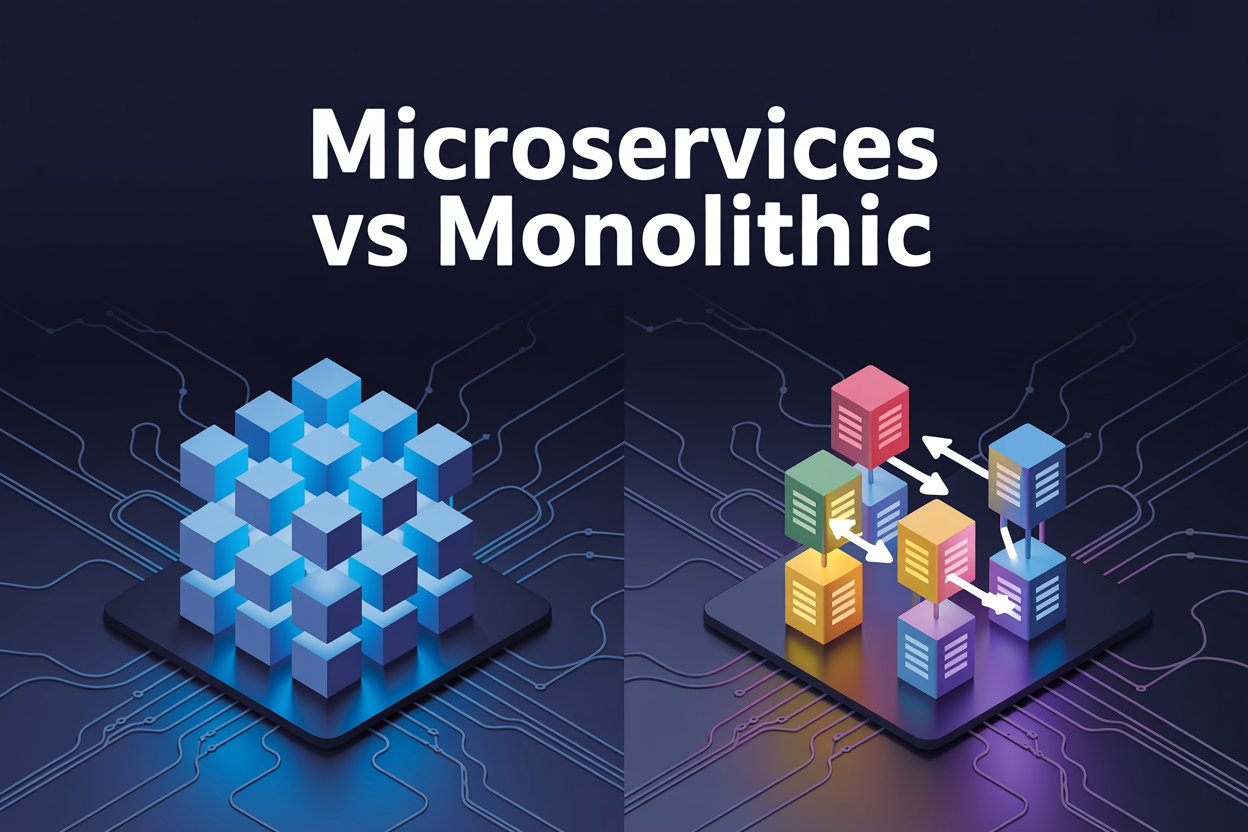
A monolithic application bundles everything—UI, business logic, and database—into one deployable unit. Early giants like Amazon and eBay started this way. It’s simple to build initially, but scaling means scaling everything. Teams loved it because one codebase meant straightforward debugging, testing, and deployment without complex service coordination.
What Is Microservices Architecture and Why It Matters

Breaking Applications Into Small, Independent Services
Microservices split your app into focused, deployable units — each owning a single job.
How Services Communicate Through APIs and Messaging
They talk via REST APIs or message brokers like Kafka.
Key Principles That Define a True Microservices Approach
- Independent deployment
- Decentralized data
- Fault isolation
Head-to-Head Comparison of Both Architectures

A. Development Speed and Team Productivity
Monoliths move faster early on—one codebase, simple debugging.
B. Scalability and High Traffic
Microservices scale individual services independently, handling traffic spikes efficiently.
C. Deployment Flexibility
Microservices enable frequent, isolated releases; monoliths require full redeployment.
D. Fault Isolation
Microservices contain failures; monoliths risk total system crashes.
E. Maintenance Complexity
Monoliths grow tangled over time; microservices add operational overhead instead.
When Monolithic Architecture Is the Right Choice

Best Fit for Small Teams and Early-Stage Startups
Scenarios Where Simplicity Outweighs Scalability Needs
When you’re building fast and validating ideas, monolithic application design wins. Small teams move quicker without managing multiple services, deployments stay simple, and debugging is straightforward. If your traffic is predictable and your product is still finding its footing, a monolith genuinely makes more sense than microservices.
When Microservices Architecture Delivers Greater Value

A. Scaling Specific Components Without Rebuilding the Whole System
B. Supporting Large Distributed Teams Working Independently
C. Meeting Demands of High-Growth and Enterprise-Level Applications
D. Enabling Faster Innovation Through Independent Service Updates
Microservices architecture shines when your app needs targeted scaling, large teams, and rapid iteration. Teams own separate services, deploy independently, and scale only what’s under pressure—cutting costs and boosting speed. For high-growth products, this modern application architecture keeps innovation moving without system-wide bottlenecks slowing everything down.
Key Challenges to Overcome With Each Approach

Managing Complexity and Technical Debt in Monoliths
Tightly coupled codebases make changes risky and slow over time.
Handling Distributed System Failures in Microservices
Network latency, partial failures, and service dependencies create debugging nightmares.
Controlling Infrastructure and Operational Costs
- Monoliths: simple but hard to scale selectively
- Microservices: flexible but expensive to manage
How to Choose the Right Architecture for Your Project

Evaluating Team Size, Skills, and Organizational Structure
Small teams ship faster with a monolith. Larger teams with specialized squads benefit from microservices ownership models.
Aligning Architecture With Business Goals
Early-stage startups should validate fast — monoliths win here. Scaling products with independent growth areas call for microservices.
Budget and Timeline Constraints
Microservices need DevOps investment upfront. Tight budgets favor monoliths.

Choosing between microservices and monolithic architecture is not a one-size-fits-all decision. Both approaches have real strengths and real trade-offs. Monolithic architecture keeps things simple and fast to build, making it a solid choice for smaller projects or early-stage applications. Microservices, on the other hand, shine when you need scalability, flexibility, and the ability to grow different parts of your system independently. The right pick depends on your team size, project complexity, budget, and long-term goals.
Before you commit to either path, take an honest look at where your project stands today and where you want it to go. Talk to your developers, map out your scaling needs, and think about how much operational complexity your team can realistically handle. There is no wrong answer here — only the answer that fits your specific situation. Start with what works for you now, and build with the future in mind.
The post Microservices vs Monolithic Architecture: Understanding Modern Application Design first appeared on Business Compass LLC.
from Business Compass LLC https://ift.tt/nJqA7co
via IFTTT


Comments
Post a Comment