Automating Infrastructure Compliance with Terraform Drift Detection on AWS
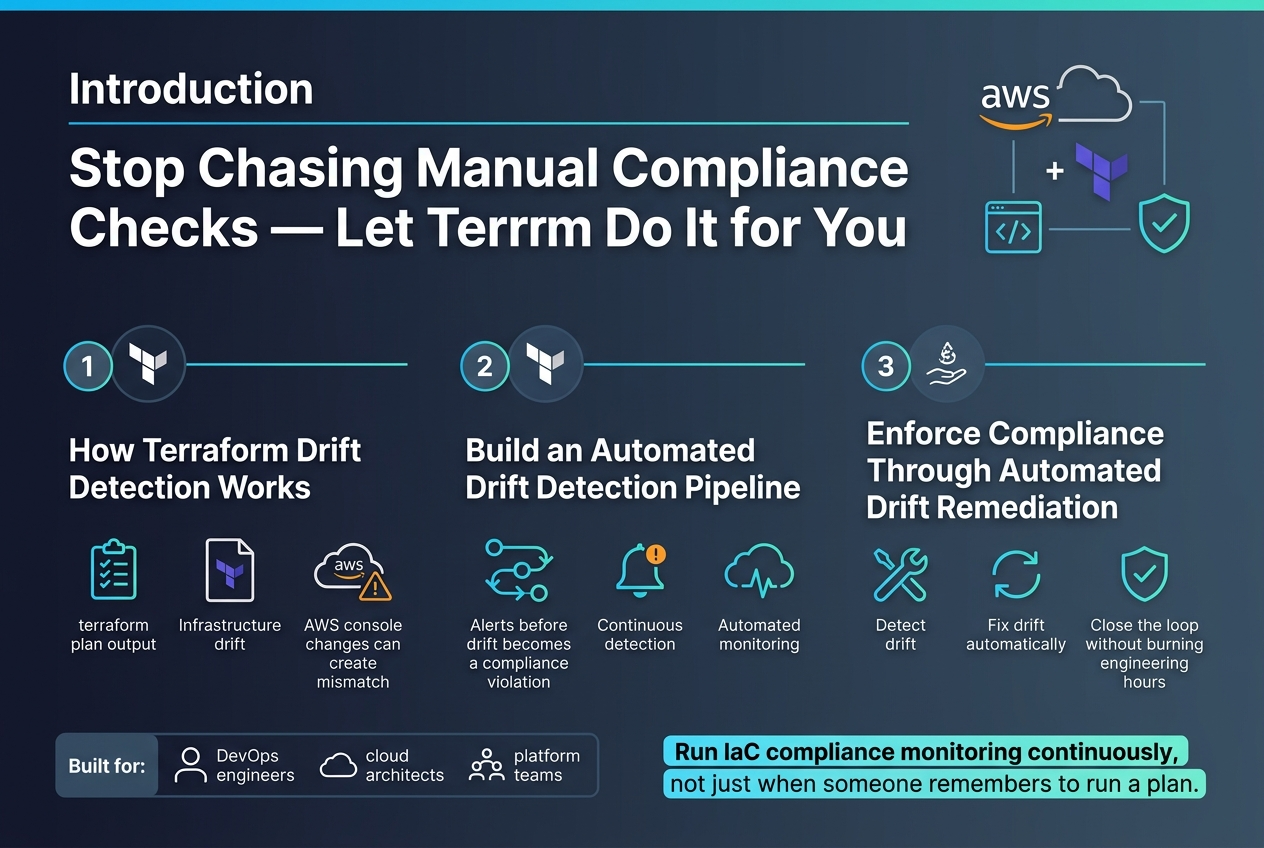
Stop Chasing Manual Compliance Checks — Let Terraform Do It for You
If you manage AWS infrastructure at any real scale, you already know the problem. Someone tweaks a security group directly in the console, a resource gets resized outside of Terraform, and suddenly your actual infrastructure no longer matches what your code says it should. That gap is called infrastructure drift — and left unchecked, it quietly becomes a compliance nightmare.
This guide is for DevOps engineers, cloud architects, and platform teams who are tired of discovering drift after something breaks or an audit flags it. If you’re already using Terraform on AWS, you’re closer to fixing this than you think.
Here’s what we’ll cover:
- How Terraform drift detection actually works — what the
terraform planoutput is really telling you, and how AWS infrastructure drift sneaks in even on well-managed accounts - Building an automated drift detection pipeline — so your team gets alerts before drift becomes a compliance violation, not after
- Enforcing compliance through automated drift remediation — closing the loop between detecting drift and actually fixing it without burning engineering hours
By the end, you’ll have a clear path to running IaC compliance monitoring continuously, not just when someone remembers to run a plan.
Understanding Infrastructure Drift and Its Business Impact
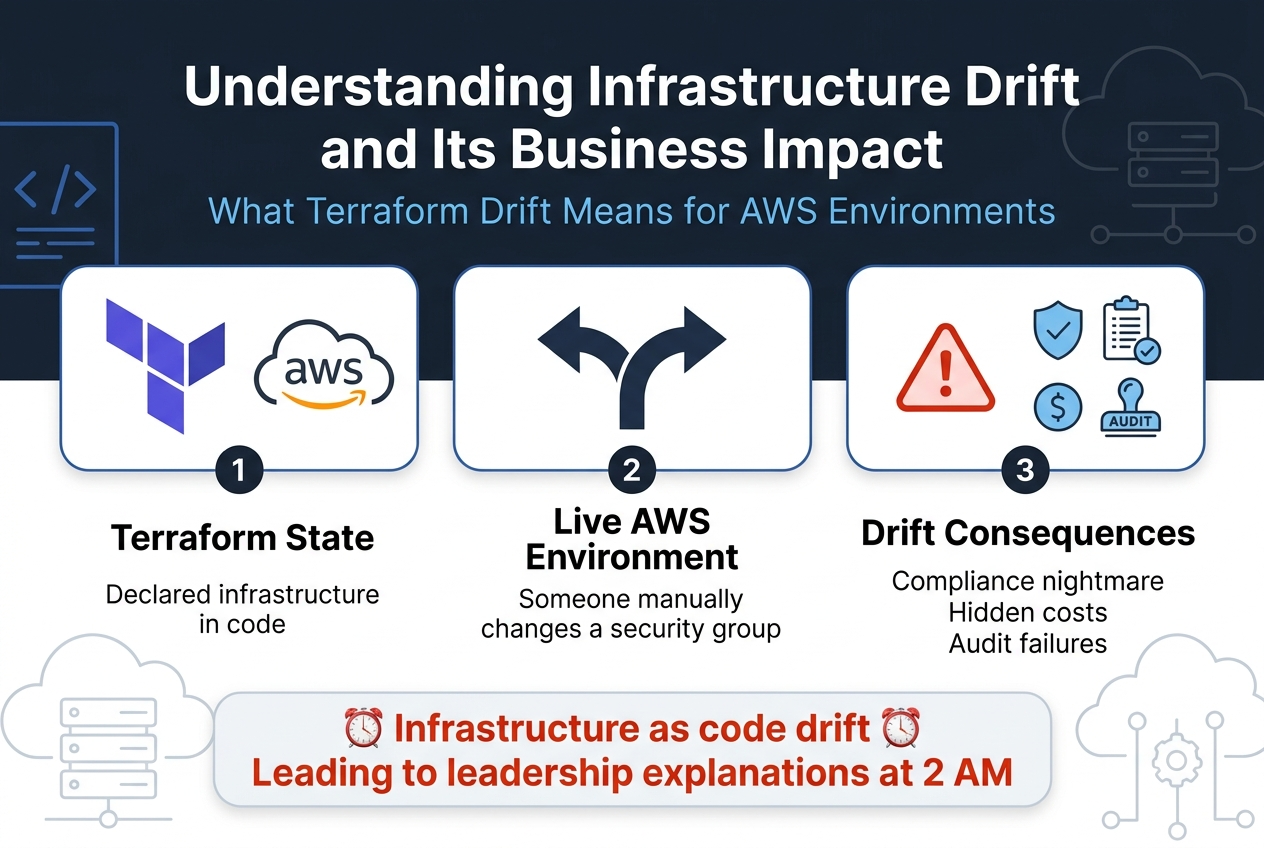
What Terraform Drift Means for AWS Environments
AWS infrastructure drift happens when your live environment quietly diverges from your Terraform state — someone tweaks a security group manually, and suddenly your infrastructure as code drift becomes a compliance nightmare, exposing hidden costs and audit failures that no engineer wants explaining to leadership at 2 AM.
How Terraform Detects Drift in AWS Infrastructure
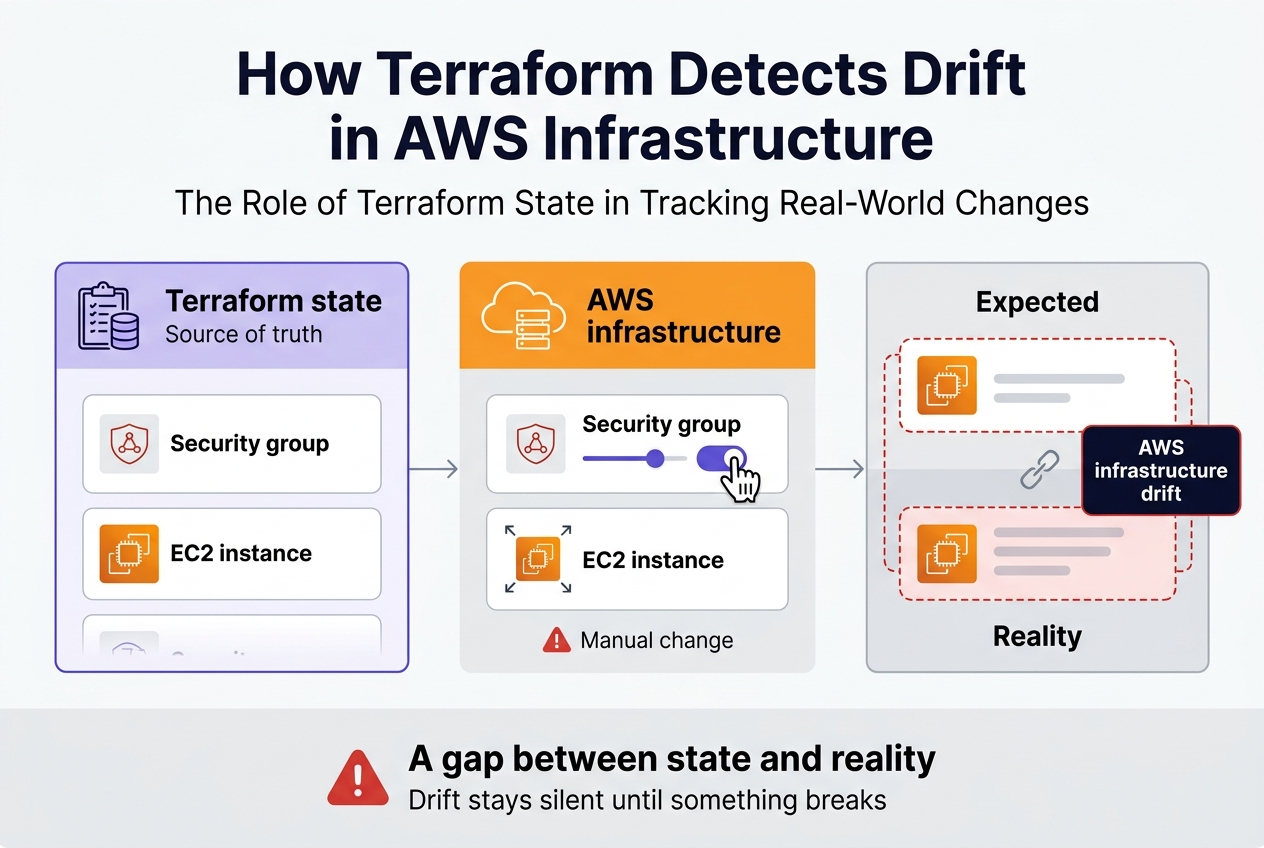
The Role of Terraform State in Tracking Real-World Changes
Terraform state acts as your source of truth, mapping every AWS resource to its expected configuration. When someone manually tweaks a security group or resizes an EC2 instance outside Terraform, that change creates AWS infrastructure drift — a gap between state and reality that silent until something breaks.
Building an Automated Drift Detection Pipeline
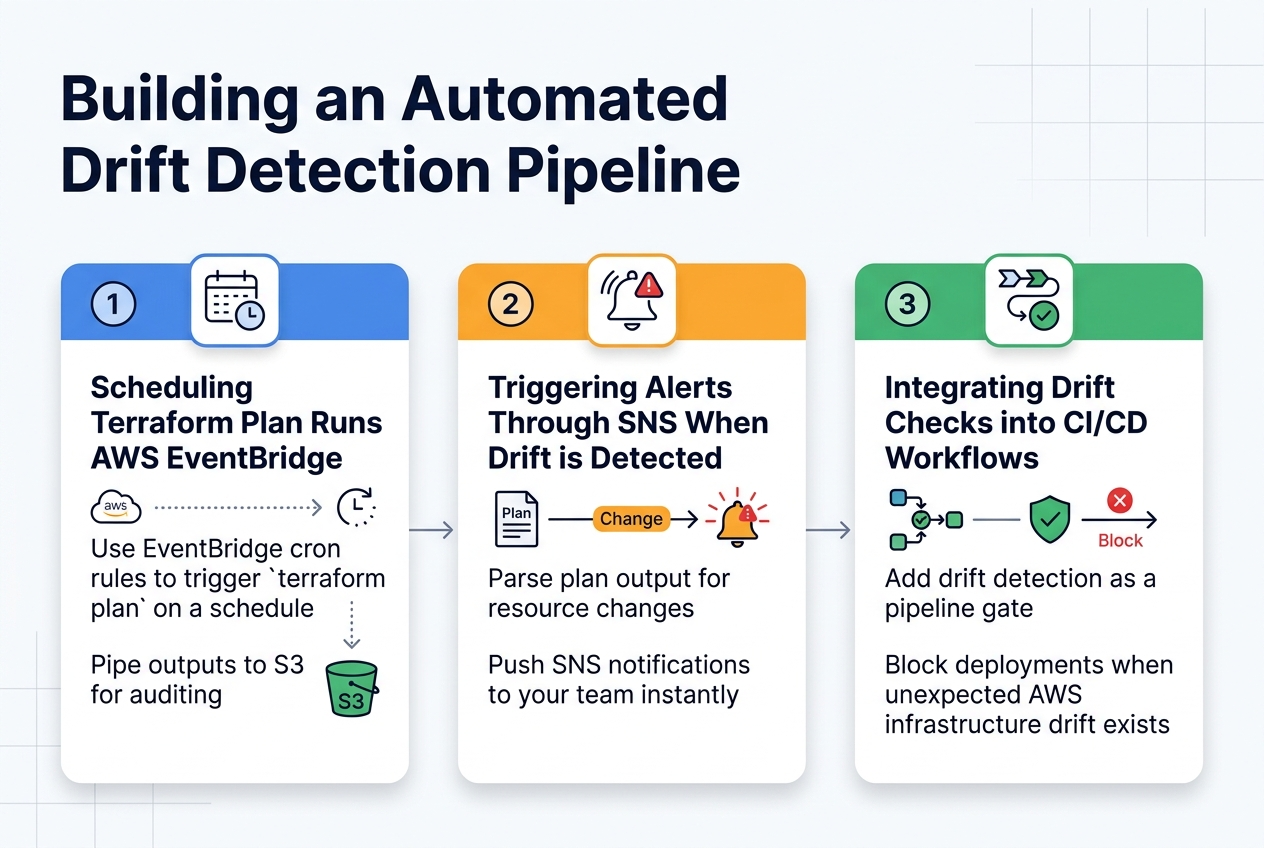
Scheduling Terraform Plan Runs with AWS EventBridge
Use EventBridge cron rules to trigger terraform plan on a schedule, piping outputs to S3 for auditing.
Triggering Alerts Through SNS When Drift is Detected
Parse plan output for resource changes, then push SNS notifications to your team instantly.
Integrating Drift Checks into CI/CD Workflows
Add drift detection as a pipeline gate—block deployments when unexpected AWS infrastructure drift exists.
Enforcing Compliance Standards Through Drift Remediation
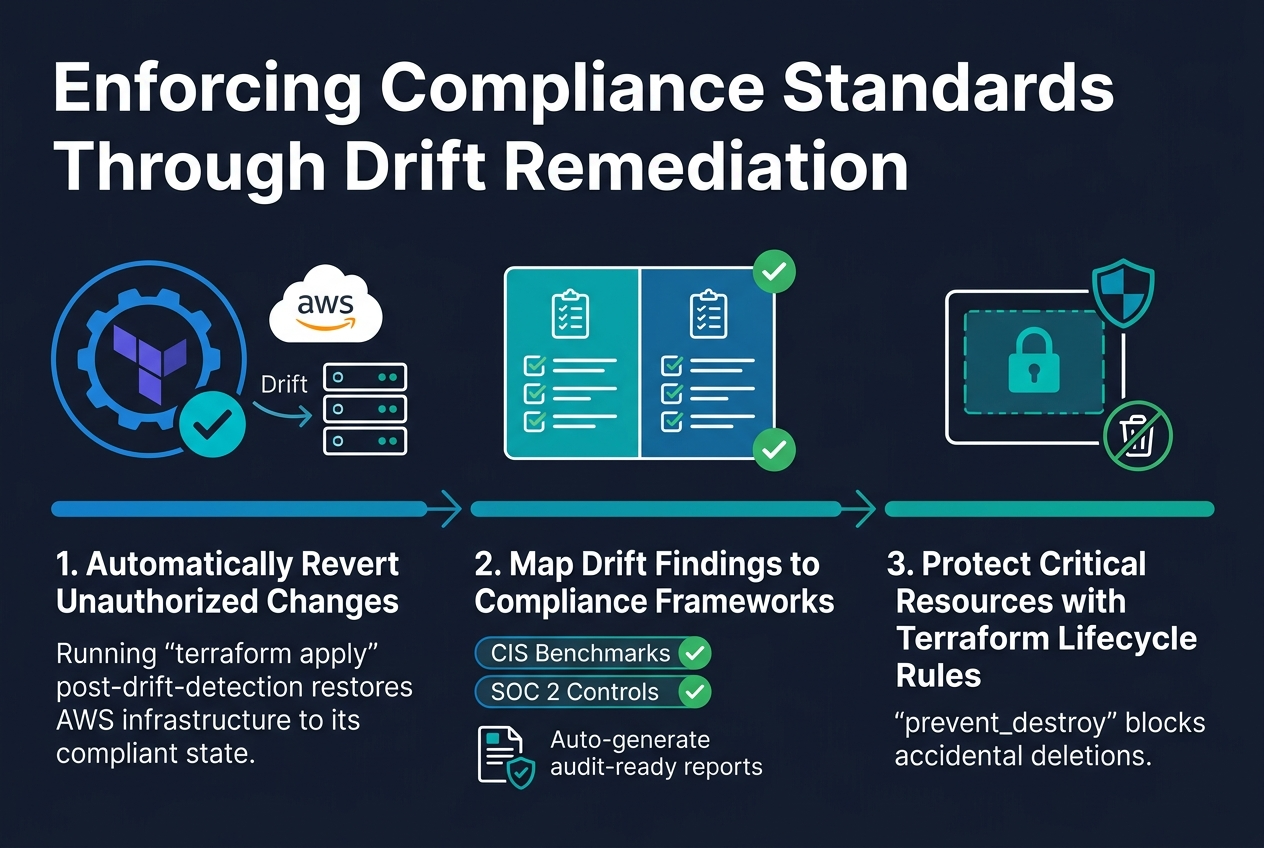
Automatically Reverting Unauthorized Changes with Terraform Apply
Running terraform apply post-drift-detection automatically restores AWS infrastructure to its compliant state, eliminating manual fixes.
Mapping Drift Findings to Compliance Frameworks Like CIS and SOC 2
- Tag drift findings against CIS benchmarks or SOC 2 controls
- Auto-generate audit-ready reports
Protecting Critical Resources with Terraform Lifecycle Rules
Use prevent_destroy to block accidental deletions.
Monitoring and Reporting Drift at Scale
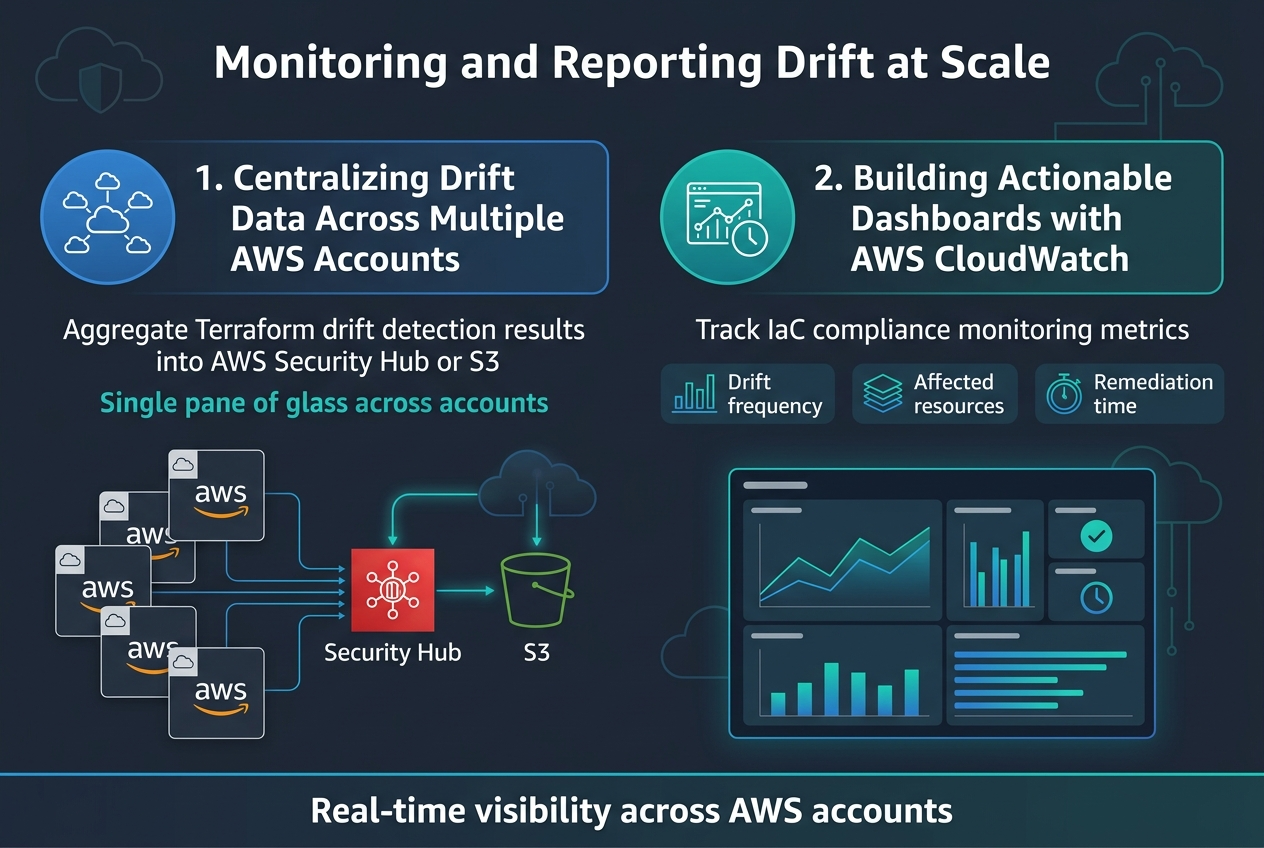
Centralizing Drift Data Across Multiple AWS Accounts
Aggregate Terraform drift detection results into AWS Security Hub or S3, giving teams a single pane of glass across accounts.
Building Actionable Dashboards with AWS CloudWatch
Track IaC compliance monitoring metrics — drift frequency, affected resources, remediation time — using CloudWatch dashboards for real-time visibility.
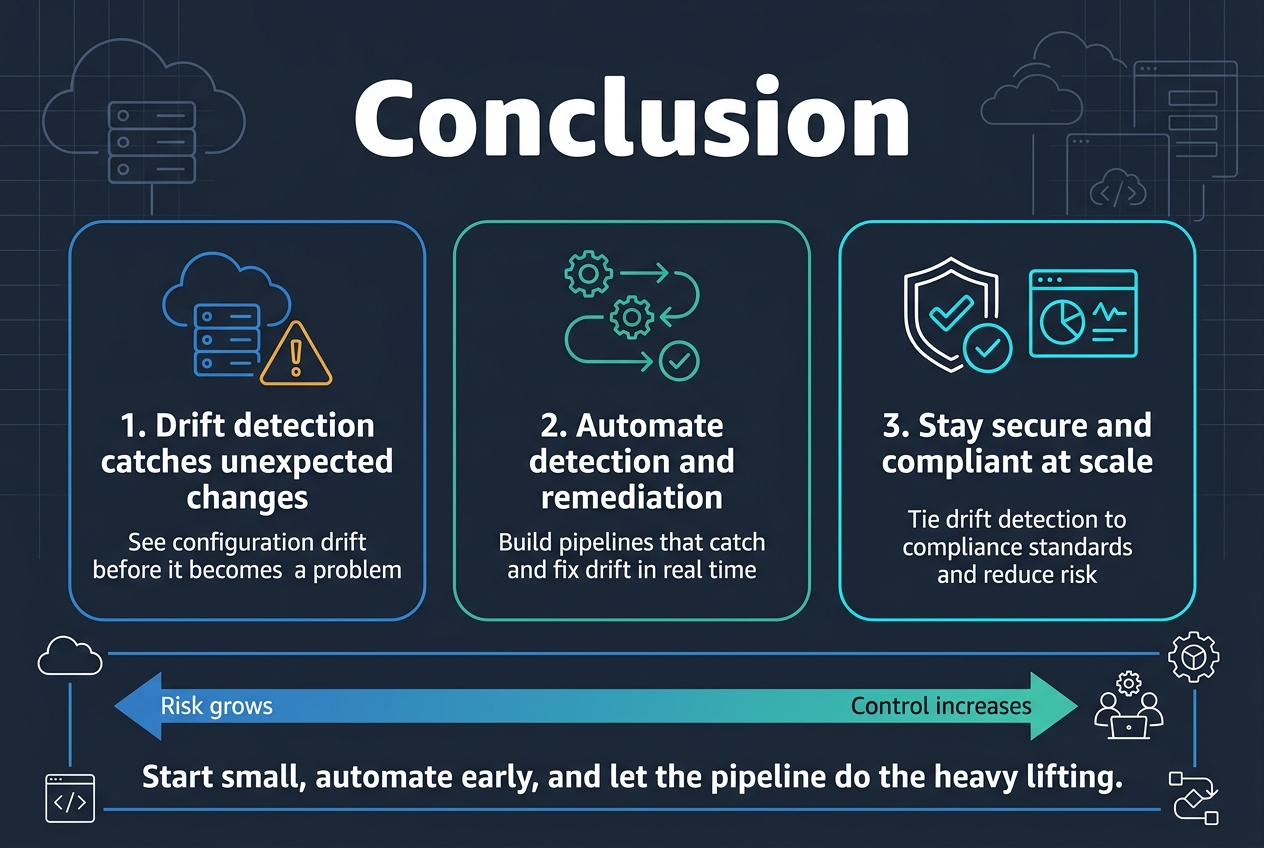
Keeping your AWS infrastructure in check doesn’t have to be a manual, time-consuming headache. Terraform drift detection gives you a reliable way to catch unexpected changes before they snowball into security gaps or compliance nightmares. From understanding what drift actually means for your business to building automated pipelines that catch and fix it in real time, the pieces all fit together into a system that works quietly in the background while your team focuses on building.
The bottom line is simple — the longer drift goes unnoticed, the bigger the risk. Setting up automated detection, tying it to your compliance standards, and keeping an eye on things at scale puts you in control rather than constantly playing catch-up. If you haven’t already started building drift detection into your Terraform workflow on AWS, now is a great time to take that first step. Start small, automate early, and let the pipeline do the heavy lifting.
The post Automating Infrastructure Compliance with Terraform Drift Detection on AWS first appeared on Business Compass LLC.
from Business Compass LLC https://ift.tt/Ci8MdNg
via IFTTT


Comments
Post a Comment