Building an Autonomous DevOps Agent with LangGraph and Amazon Bedrock
Building an Autonomous DevOps Agent with LangGraph and Amazon Bedrock
DevOps teams struggle with repetitive tasks and reactive incident management that drain time from strategic work. An autonomous devops agent powered by AI can handle routine operations, make intelligent decisions, and respond to issues before they escalate.
This guide is designed for DevOps engineers, platform architects, and development teams who want to implement devops automation using modern AI frameworks. You’ll learn to build agents that can monitor systems, analyze logs, and execute remediation actions without constant human oversight.
We’ll explore how the langgraph framework provides the foundation for creating stateful, multi-step workflows that can reason through complex scenarios. You’ll discover how amazon bedrock integration enables your agent to make intelligent decision making devops choices using large language models trained on operational best practices.
Finally, we’ll walk through a complete devops agent implementation, showing you how to design autonomous agent architecture that scales with your infrastructure needs and adapts to changing conditions in real-time.
Understanding the Core Components of Autonomous DevOps

Defining autonomous operations in modern software development
Autonomous DevOps represents a paradigm shift where systems independently monitor, analyze, and respond to operational challenges without human intervention. Unlike traditional DevOps practices that rely heavily on manual oversight and reactive responses, an autonomous devops agent continuously learns from system behaviors and makes intelligent decisions to maintain optimal performance.
Modern autonomous operations leverage machine learning algorithms to predict potential failures, automatically scale resources based on demand patterns, and orchestrate complex deployment pipelines. These systems go beyond simple rule-based automation by incorporating context-aware decision-making capabilities that adapt to changing environments and business requirements.
The foundation of autonomous operations rests on three core pillars: intelligent observability, predictive analytics, and automated remediation. Intelligent observability collects and correlates data across the entire technology stack, while predictive analytics anticipate issues before they impact users. Automated remediation executes corrective actions based on predefined policies and learned behaviors.
Key benefits of self-healing and self-managing systems
Self-healing systems dramatically reduce mean time to recovery (MTTR) by detecting and resolving issues in real-time. When application performance degrades or infrastructure components fail, these systems automatically trigger recovery procedures, restart services, or redistribute workloads to healthy nodes without waiting for human intervention.
The economic impact of autonomous systems extends beyond reduced operational overhead. Organizations report significant improvements in system reliability, with uptime increasing from typical 99.5% to 99.9% or higher. This translates to substantial cost savings, especially for businesses where downtime directly impacts revenue.
Self-managing capabilities enable dynamic resource optimization that continuously adjusts infrastructure allocation based on actual usage patterns. This intelligent resource management reduces cloud costs by 20-40% while maintaining performance standards. The systems learn from historical data to predict peak usage periods and proactively scale resources accordingly.
Essential capabilities required for intelligent automation
AI-powered devops requires sophisticated monitoring and data collection mechanisms that capture metrics across applications, infrastructure, and user experiences. These systems must process vast amounts of telemetry data in real-time to identify patterns and anomalies that indicate potential problems.
Decision-making algorithms need access to comprehensive knowledge bases that include operational procedures, troubleshooting guides, and historical incident responses. This knowledge must be continuously updated based on successful remediation actions and new operational insights.
Integration capabilities are crucial for autonomous agents to interact with existing tools and platforms. The agent must seamlessly connect with CI/CD pipelines, monitoring systems, cloud platforms, and notification services to execute complex workflows across the entire devops automation ecosystem.
Integration challenges with existing DevOps workflows
Legacy systems often lack the APIs and instrumentation necessary for autonomous agents to gather required data or execute remediation actions. Organizations frequently need to modernize their infrastructure and implement comprehensive observability solutions before deploying autonomous capabilities.
Security and compliance considerations add complexity to autonomous system implementations. Automated actions must adhere to organizational policies, regulatory requirements, and security protocols while maintaining audit trails for all decisions and actions taken by the system.
Change management becomes critical when introducing intelligent decision making devops capabilities. Teams need training to understand how autonomous systems operate, when to intervene, and how to configure appropriate boundaries for automated actions. Building trust in autonomous systems requires transparent reporting of decisions and outcomes, allowing teams to validate and refine the system’s behavior over time.
Human oversight mechanisms must be carefully designed to allow intervention when necessary while avoiding the tendency to micromanage autonomous operations, which can undermine their effectiveness and benefits.
LangGraph Framework Architecture and Capabilities
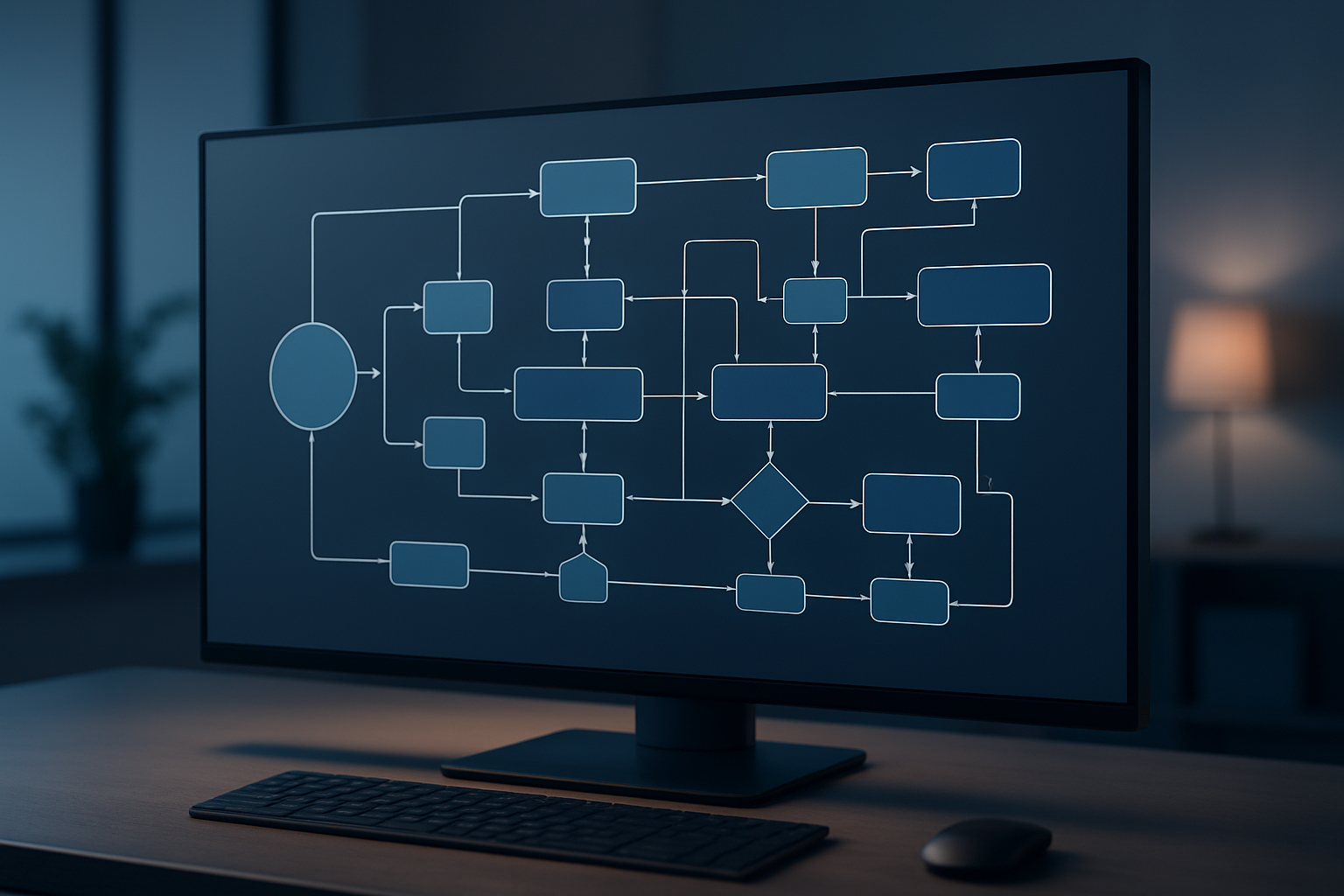
Graph-based workflow orchestration for complex operations
LangGraph transforms complex DevOps operations into manageable, visual workflows through its graph-based architecture. Each node in the graph represents a specific task or decision point, while edges define the flow of information and control between operations. This approach breaks down intricate deployment pipelines, monitoring workflows, and incident response procedures into discrete, interconnected components.
The LangGraph framework excels at handling conditional logic that traditional linear automation tools struggle with. When an autonomous DevOps agent encounters a failed deployment, it can branch into multiple recovery paths simultaneously – rolling back changes, notifying stakeholders, and analyzing logs – all orchestrated through the graph’s decision nodes.
Key orchestration capabilities include:
- Parallel execution paths for concurrent operations like testing multiple environments
- Dynamic routing based on real-time system conditions and performance metrics
- Error handling branches that automatically trigger remediation workflows
- Conditional gates that pause workflows pending external validation or approval
- Loop structures for iterative processes like gradual deployment rollouts
The graph structure makes complex workflows transparent and debuggable. DevOps teams can visualize exactly where automation decisions occur and modify workflow logic without rewriting entire scripts. This visual representation proves invaluable when troubleshooting failed automation or explaining deployment processes to stakeholders.
Multi-agent coordination and communication patterns
Modern DevOps environments require multiple specialized agents working together seamlessly. LangGraph enables sophisticated coordination patterns where different agents handle distinct responsibilities while maintaining synchronized state across the entire system.
Agent specialization becomes straightforward with LangGraph’s communication framework. A monitoring agent continuously tracks system health while a deployment agent manages code releases. When performance metrics cross predefined thresholds, the monitoring agent signals the deployment agent to pause rollouts or trigger rollback procedures.
Common coordination patterns include:
- Publisher-subscriber models where infrastructure agents broadcast status updates to multiple listening services
- Request-response chains for sequential operations requiring validation at each step
- Event-driven triggers that activate specific agents based on system conditions
- Hierarchical delegation where a master agent distributes tasks to specialized worker agents
- Collaborative decision-making where multiple agents contribute input to complex choices
The framework handles message passing, state synchronization, and conflict resolution automatically. When multiple agents attempt to modify the same resource, LangGraph’s coordination layer ensures consistency through built-in locking mechanisms and transaction management.
State management and decision-making processes
Effective autonomous agent architecture depends heavily on robust state management that maintains context across complex, long-running operations. LangGraph provides sophisticated state handling that persists critical information between workflow steps while enabling intelligent decision-making based on accumulated context.
The state management system maintains multiple layers of information:
- Execution state tracking current workflow position and pending operations
- Historical context preserving decisions and outcomes for learning purposes
- Environmental state capturing real-time system conditions and resource availability
- Policy state storing configuration rules and operational constraints
- Communication state managing message queues and inter-agent coordination
Decision-making processes leverage this comprehensive state to make intelligent choices about infrastructure management. When determining whether to scale resources, the agent considers current load patterns, historical scaling events, cost constraints, and performance requirements simultaneously.
The framework supports both rule-based and learned decision-making approaches. Simple operational decisions follow predefined policies, while complex scenarios can leverage machine learning models to evaluate multiple variables and predict optimal outcomes. This hybrid approach ensures reliable automation for routine tasks while enabling sophisticated responses to novel situations.
State persistence across agent restarts and system failures ensures continuity of operations. Critical workflow state automatically saves to persistent storage, allowing agents to resume complex operations exactly where they left off after unexpected interruptions.
Amazon Bedrock Integration for Intelligent Decision Making

Leveraging Foundation Models for Operational Intelligence
Amazon Bedrock’s foundation models transform how autonomous DevOps agents process and understand operational data. These models excel at analyzing logs, interpreting error messages, and correlating incidents across different systems. The key lies in selecting models that can handle the technical language specific to your infrastructure stack.
Claude 3.5 Sonnet proves particularly effective for code analysis and troubleshooting scenarios, while Titan models offer cost-effective solutions for routine monitoring tasks. When configuring your autonomous devops agent, consider how each model’s strengths align with specific operational challenges. For instance, Anthropic’s models demonstrate superior reasoning capabilities when diagnosing complex system failures, making them ideal for incident response workflows.
The amazon bedrock integration enables real-time decision-making by providing contextual understanding of system metrics, deployment logs, and user feedback. Your DevOps agent can leverage these models to predict potential issues before they escalate, automatically suggest remediation steps, and even implement fixes based on learned patterns from previous incidents.
Custom Model Selection for DevOps-specific Tasks
Different DevOps scenarios require tailored model selection strategies. Infrastructure provisioning tasks benefit from models trained on cloud architecture patterns, while security scanning operations need models that understand vulnerability databases and compliance frameworks.
Model Selection Framework:
- Code Reviews and Analysis: Claude 3.5 Sonnet for complex logic evaluation
- Log Analysis and Pattern Recognition: Titan Embeddings for efficient text processing
- Incident Response: Anthropic models for multi-step reasoning
- Capacity Planning: Mathematical models like Claude 3 for numerical analysis
- Security Assessments: Models fine-tuned on security datasets
Fine-tuning foundation models on your organization’s specific DevOps patterns significantly improves accuracy. Create custom training datasets from your incident history, deployment logs, and configuration files. This approach helps the langgraph framework understand your unique infrastructure patterns and organizational preferences.
Consider implementing model ensembles where multiple models contribute to decision-making. For critical operations, combine the analytical strength of one model with the creative problem-solving of another. This redundancy improves reliability and reduces the risk of model-specific blind spots affecting your ai-powered devops workflows.
Cost Optimization Strategies for Production Environments
Managing costs while maintaining performance requires strategic thinking about model usage patterns. Amazon Bedrock’s pricing varies significantly between models, making careful selection crucial for production deployments.
Cost Reduction Techniques:
- Model Tiering: Use lightweight models for routine tasks, reserve powerful models for complex scenarios
- Batch Processing: Group similar requests to optimize API calls and reduce latency costs
- Caching Strategies: Store frequently accessed model outputs to avoid redundant processing
- Request Optimization: Minimize token usage through efficient prompt engineering
- Regional Selection: Choose regions with optimal pricing for your workload patterns
Implement dynamic model switching based on task complexity and urgency. Your autonomous agent architecture should evaluate each request and route it to the most cost-effective model capable of handling the task. This approach can reduce costs by 40-60% compared to using premium models for all operations.
Monitor usage patterns continuously and adjust your model selection algorithms based on actual performance data. Set up automated alerts for unusual spending patterns and implement circuit breakers that prevent runaway costs during system anomalies.
Security Considerations for AI-Powered Operations
Security becomes paramount when AI systems have the ability to modify infrastructure and deploy code. Amazon Bedrock provides several built-in security features, but additional measures are essential for production environments.
Essential Security Measures:
- Role-Based Access Control: Limit model access based on user roles and operational contexts
- Data Encryption: Encrypt all communications between your agent and Bedrock services
- Audit Logging: Maintain detailed logs of all AI-driven decisions and actions
- Input Sanitization: Validate and sanitize all inputs to prevent prompt injection attacks
- Output Validation: Implement checks to verify AI-generated configurations before deployment
Establish clear boundaries for what your intelligent decision making devops system can modify autonomously. Critical infrastructure changes should always require human approval, while routine maintenance tasks can proceed automatically. Create approval workflows that escalate based on potential impact and confidence levels.
Regular security assessments should include AI-specific threat modeling. Test your system against adversarial inputs, monitor for unusual behavior patterns, and maintain incident response procedures specifically for AI-related security events. This proactive approach protects your automated infrastructure management system from both technical vulnerabilities and social engineering attacks targeting AI components.
Designing the Autonomous Agent Architecture
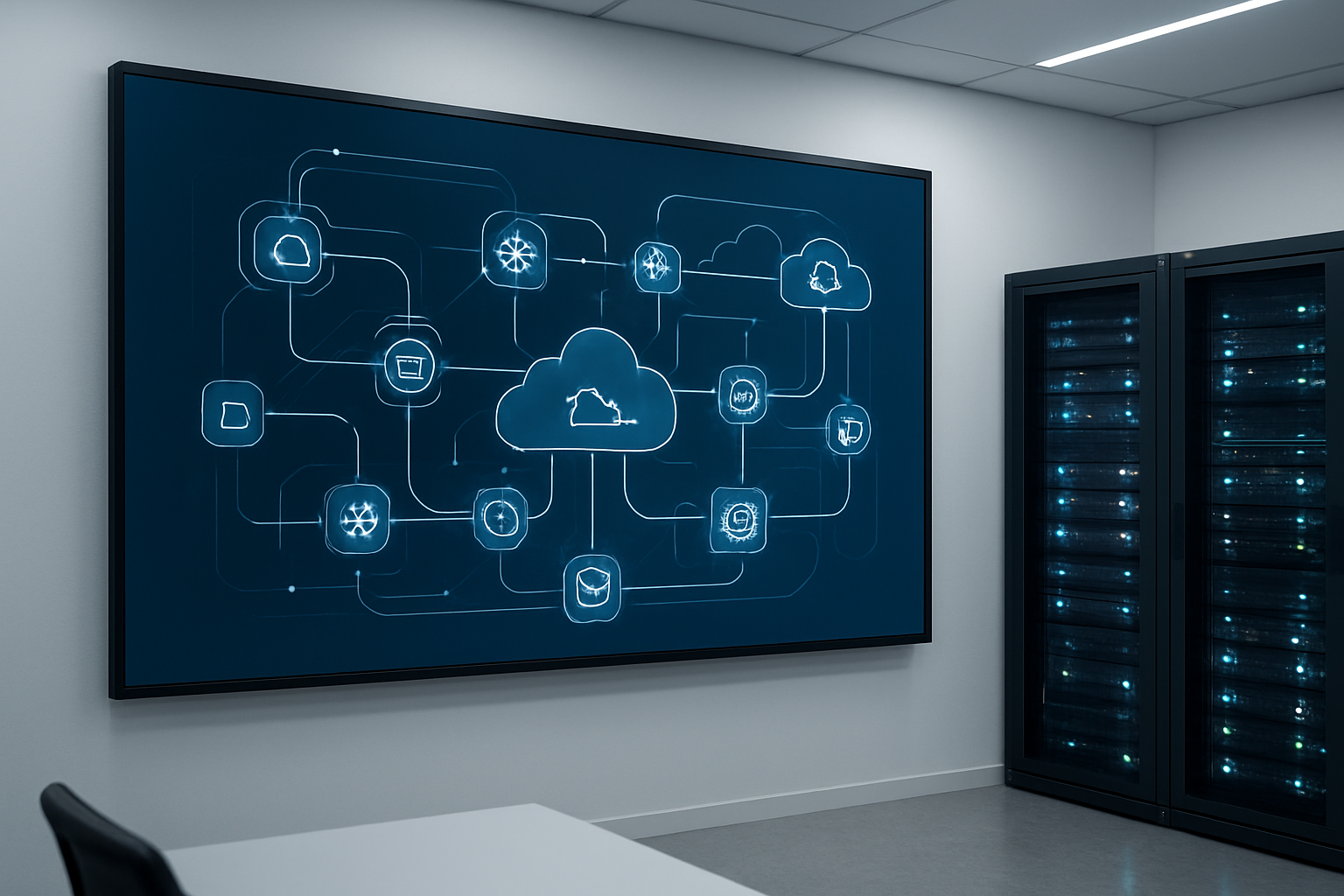
Event detection and monitoring system setup
Creating an effective autonomous DevOps agent starts with building a robust event detection and monitoring foundation. Your autonomous devops agent needs to continuously monitor multiple data streams across your infrastructure, applications, and deployment pipelines. This involves integrating various monitoring tools like CloudWatch, Prometheus, and custom application metrics into a unified data ingestion layer.
The event detection system should capture real-time telemetry from containers, serverless functions, databases, and network components. Set up webhook endpoints to receive alerts from your existing monitoring stack, and configure log aggregation to parse structured and unstructured data. The langgraph framework excels at processing these diverse data types through its graph-based architecture, allowing you to create nodes that handle different event types and route them appropriately.
Consider implementing event correlation mechanisms that can identify patterns across multiple signals. For example, when CPU usage spikes coincide with increased error rates and slow response times, your system should recognize this as a potential performance issue rather than treating each metric as an isolated incident. This correlation capability becomes the foundation for intelligent decision-making in your autonomous agent architecture.
Decision tree logic for automated responses
The heart of your autonomous devops agent lies in its decision-making capabilities. Design decision trees that map specific event patterns to appropriate automated responses. Start with simple binary decisions – if disk usage exceeds 90%, trigger cleanup scripts. If deployment failure rate crosses a threshold, automatically rollback to the previous stable version.
Build your decision logic using conditional nodes within the langgraph framework that evaluate multiple criteria simultaneously. Each decision node should consider the severity of the issue, the current system state, and the potential impact of different response actions. For instance, scaling up resources during peak traffic hours might be acceptable, but the same action during maintenance windows could interfere with planned operations.
Create response templates for common scenarios:
- Automatic scaling based on load patterns
- Log rotation and cleanup procedures
- Service restart protocols for specific error types
- Network traffic rerouting during connectivity issues
- Database connection pool adjustments
Your amazon bedrock integration enables sophisticated pattern recognition that goes beyond simple threshold-based rules. The AI models can learn from historical incident data to make more nuanced decisions about when to intervene automatically versus when human judgment is required.
Escalation pathways for complex scenarios
Not every situation can be resolved through automated responses. Your autonomous agent architecture must include clear escalation pathways for scenarios that exceed predetermined confidence thresholds or involve critical system components. Design a tiered escalation system that routes complex issues to appropriate human experts based on the type and severity of the problem.
The first escalation tier should involve automated notifications to on-call engineers with detailed context about what the agent observed and what actions it already attempted. Include relevant logs, metrics, and a timeline of events to help human responders understand the situation quickly. The langgraph framework can generate these comprehensive incident reports by traversing the decision graph and collecting relevant data from each step.
For situations involving security concerns, data integrity issues, or potential customer impact, implement immediate escalation to senior technical staff. Configure your system to recognize these high-stakes scenarios through keyword analysis in logs, specific error patterns, or metrics that indicate data corruption or unauthorized access attempts.
Create escalation rules that consider:
- Time of day and team availability
- Severity classification based on business impact
- Required expertise level for the specific issue type
- Previous escalation history for similar problems
Feedback loops for continuous improvement
Building feedback loops for continuous improvement transforms your autonomous DevOps agent from a static rule-based system into a learning platform. Implement mechanisms to capture the outcomes of automated decisions and use this data to refine your devops automation strategies over time.
Track key performance metrics for every automated action: resolution time, accuracy of problem identification, false positive rates, and user satisfaction with the automated responses. Store this feedback data in a structured format that your amazon bedrock integration can analyze to identify improvement opportunities.
Create feedback collection points at multiple stages:
- Immediate feedback from system monitoring post-action
- Human operator feedback on escalated issues
- Post-incident reviews that evaluate the agent’s performance
- Regular analysis of automation success rates across different scenario types
The langgraph framework supports dynamic graph modification, allowing your agent to evolve its decision-making processes based on accumulated learning. When the system identifies patterns in feedback data, it can automatically adjust threshold values, modify response priorities, or suggest new automation rules for human approval.
Implement A/B testing capabilities where the agent can try different approaches for similar scenarios and measure which strategies produce better outcomes. This experimental approach helps optimize your intelligent decision making devops processes while maintaining system stability through careful rollout procedures.
Implementation Strategy and Best Practices
Development Environment Configuration and Testing
Setting up your autonomous DevOps agent requires a robust development environment that mirrors your production infrastructure. Start by creating isolated sandbox environments where your langgraph framework can safely interact with AWS services without affecting live systems. Use Infrastructure as Code (IaC) tools like Terraform or CloudFormation to spin up consistent environments that include all necessary permissions for Amazon Bedrock integration.
Your testing strategy should include unit tests for individual agent components, integration tests for DevOps automation workflows, and end-to-end tests that validate complete decision-making cycles. Mock external services during development to avoid unnecessary costs and ensure predictable test results. Create comprehensive test datasets that cover edge cases your agent might encounter in real-world scenarios.
Environment configuration also means establishing proper logging, monitoring, and debugging capabilities. Implement structured logging throughout your agent’s decision-making process, capturing input parameters, reasoning steps, and final actions. This becomes crucial when troubleshooting complex AI-powered DevOps scenarios where the agent’s logic might not be immediately apparent.
Set up dedicated development accounts in AWS to prevent accidental modifications to production resources. Configure appropriate IAM roles with least-privilege access, and establish clear boundaries between development, staging, and production environments. Your autonomous agent architecture should include environment-specific configurations that adapt behavior based on the deployment context.
Gradual Deployment Approach for Risk Mitigation
Rolling out an autonomous DevOps agent requires careful planning to minimize operational risks. Begin with read-only operations where your agent observes and recommends actions without executing them. This approach allows teams to build confidence in the agent’s decision-making capabilities while maintaining full human oversight.
Implement a phased rollout starting with non-critical environments like development and testing infrastructure. Your DevOps agent implementation should include circuit breakers and kill switches that immediately halt operations if anomalies are detected. Define clear rollback procedures and ensure your agent can revert changes automatically when predefined thresholds are exceeded.
Consider implementing approval workflows for high-risk operations. While the goal is full autonomy, certain actions like production deployments or infrastructure changes should initially require human approval. Use feature flags to gradually enable more autonomous behaviors as confidence grows.
Create staging environments that closely mirror production to validate agent behavior before promoting changes. Your langgraph framework should support different execution modes, allowing you to test complex workflows without impacting live systems. Establish clear success criteria for each deployment phase, including performance metrics, error rates, and user satisfaction scores.
Performance Monitoring and Optimization Techniques
Effective monitoring of your autonomous DevOps agent goes beyond traditional application metrics. Track decision-making latency, accuracy of predictions, and the correlation between agent actions and system performance. Your monitoring strategy should capture both technical metrics and business outcomes to validate the agent’s effectiveness.
Implement real-time dashboards that visualize agent activity, decision patterns, and system health. Use Amazon Bedrock integration metrics to monitor model performance, including response times, token consumption, and accuracy rates. Set up alerts for unusual patterns or performance degradation that might indicate issues with your automated infrastructure management workflows.
Optimize your agent’s performance by analyzing decision patterns and identifying opportunities for caching or pre-computation. Store frequently accessed data in fast retrieval systems and implement intelligent caching strategies for intelligent decision making DevOps operations. Monitor resource utilization across your infrastructure to ensure optimal cost-performance ratios.
Regularly analyze agent logs to identify bottlenecks and optimization opportunities. Use A/B testing to compare different approaches and continuously refine your agent’s algorithms. Track the time-to-resolution for various incident types and measure how your agent’s interventions impact overall system reliability and performance.
Real-World Use Cases and Success Metrics

Incident Response Automation Examples
Picture this: your application goes down at 2 AM, and before you even wake up, your autonomous DevOps agent has already diagnosed the issue, rolled back the problematic deployment, and restored service. That’s exactly what happened at a major e-commerce platform that implemented an AI-powered DevOps system using LangGraph framework and Amazon Bedrock integration.
The autonomous agent continuously monitored application logs, performance metrics, and user experience indicators. When transaction success rates dropped below 95%, the system immediately triggered its incident response workflow. Using natural language processing capabilities from Amazon Bedrock, the agent analyzed error patterns, cross-referenced them with recent deployments, and identified the root cause within minutes rather than hours.
Another compelling example involves a financial services company where their DevOps agent automatically handles database connection timeouts. The system detects anomalies, analyzes connection pool metrics, and implements temporary scaling measures while simultaneously creating detailed incident reports for human review. The agent reduced mean time to recovery (MTTR) from 45 minutes to under 8 minutes.
Security incidents also benefit from this approach. When suspicious API calls spike beyond normal patterns, the autonomous system can automatically implement rate limiting, block suspicious IP ranges, and notify security teams with contextual information about the threat landscape.
Deployment Pipeline Optimization Scenarios
Autonomous agent architecture shines brightest when optimizing complex deployment pipelines. A software development company reduced their deployment time from 2 hours to 22 minutes by implementing intelligent decision-making throughout their CI/CD process.
The agent analyzes code changes to determine which tests are most relevant, running comprehensive suites only when necessary. For minor configuration updates, it might skip resource-intensive integration tests while ensuring security scans still execute. This dynamic test selection saves significant compute resources and developer waiting time.
The system also optimizes deployment strategies based on historical data and current system load. During peak traffic hours, the agent automatically switches to blue-green deployments for critical services while using rolling updates for less critical components during off-peak times. This intelligent decision making DevOps approach prevents service disruptions while maintaining rapid release cycles.
Environment provisioning becomes remarkably efficient when the autonomous agent predicts resource needs based on deployment patterns. Before developers even request staging environments, the system prepares infrastructure based on upcoming merge requests and testing schedules.
Infrastructure Scaling and Resource Management
Automated infrastructure management reaches new levels of sophistication when autonomous agents predict scaling needs before performance degrades. A media streaming company saw their infrastructure costs drop by 30% while improving user experience scores by 25%.
The agent continuously analyzes traffic patterns, content popularity trends, and seasonal behaviors to make proactive scaling decisions. During major sporting events or viral content releases, the system automatically provisions additional compute resources across multiple regions, ensuring smooth user experiences without manual intervention.
Resource optimization extends beyond simple scaling. The autonomous system identifies underutilized instances, recommends consolidation opportunities, and automatically migrates workloads to more cost-effective instance types during low-traffic periods. It even negotiates spot instance usage for non-critical batch processing jobs, resulting in substantial cost savings.
Storage management becomes intelligent too. The agent monitors data access patterns and automatically moves infrequently accessed data to cheaper storage tiers while ensuring frequently accessed content remains on high-performance systems.
Measuring ROI and Operational Efficiency Gains
Quantifying the value of DevOps automation through autonomous agents reveals impressive returns on investment. Companies typically see 3-5x ROI within the first year of implementation, with some organizations reporting even higher returns.
Operational efficiency metrics show dramatic improvements across multiple dimensions:
- Incident Resolution Time: Average reduction of 60-80% in MTTR
- Deployment Frequency: 4-6x increase in safe deployment velocity
- Change Failure Rate: 40-50% decrease in production issues
- Infrastructure Costs: 20-35% reduction through intelligent resource management
- Developer Productivity: 25-40% increase in feature delivery velocity
The soft benefits are equally compelling. Developer satisfaction scores increase significantly when teams spend less time on repetitive operational tasks and more time on creative problem-solving. On-call stress decreases dramatically when autonomous systems handle routine incidents automatically.
Cost avoidance represents another major value driver. Preventing just one major production outage often justifies the entire autonomous DevOps investment. A single hour of downtime for a large e-commerce site can cost millions in lost revenue, making the business case for autonomous incident response extremely compelling.
Human resource optimization becomes measurable too. Teams can reassign senior engineers from firefighting to strategic initiatives, while junior team members focus on higher-value tasks rather than manual deployment processes. This shift in resource allocation compounds the ROI benefits over time.

Creating an autonomous DevOps agent using LangGraph and Amazon Bedrock represents a major step forward in streamlining software development and deployment processes. The combination of LangGraph’s flexible framework architecture with Amazon Bedrock’s intelligent decision-making capabilities enables teams to build sophisticated agents that can handle complex DevOps workflows with minimal human intervention. By focusing on proper architecture design, following implementation best practices, and understanding real-world applications, organizations can achieve significant improvements in deployment speed, error reduction, and operational efficiency.
The success of your autonomous DevOps agent depends on thoughtful planning and gradual implementation. Start small with a specific use case, test thoroughly, and expand functionality as your team becomes comfortable with the technology. The potential for reducing manual overhead while increasing reliability makes this investment worthwhile for teams looking to scale their operations. Take time to define clear success metrics and monitor your agent’s performance regularly to ensure it continues meeting your organization’s evolving needs.
The post Building an Autonomous DevOps Agent with LangGraph and Amazon Bedrock first appeared on Business Compass LLC.
from Business Compass LLC https://ift.tt/OiAYx6r
via IFTTT


Comments
Post a Comment