Using OpenTofu for CI/CD: Open-Source Infrastructure as Code Pipelines Explained
Using OpenTofu for CI/CD: Open-Source Infrastructure as Code Pipelines Explained

Managing cloud infrastructure manually is time-consuming and error-prone. OpenTofu CI/CD pipelines solve this problem by automating infrastructure deployment through code, giving teams the power to manage complex environments with consistency and speed.
This guide is designed for DevOps engineers, platform teams, and developers who want to build reliable infrastructure as code pipelines using OpenTofu. You'll learn practical techniques to automate your infrastructure while avoiding common pitfalls that slow down deployment cycles.
We'll walk through setting up your first OpenTofu pipeline setup from scratch, covering everything from basic configuration to handling different environments. You'll also discover best practices for OpenTofu pipeline architecture that help teams scale their infrastructure automation without creating bottlenecks. Finally, we'll explore advanced integration patterns that connect OpenTofu with your existing CI/CD tools and monitoring systems.
By the end, you'll have the knowledge to implement robust OpenTofu CI/CD workflows that make infrastructure changes as smooth as deploying application code.
Understanding OpenTofu and Its Advantages Over Terraform
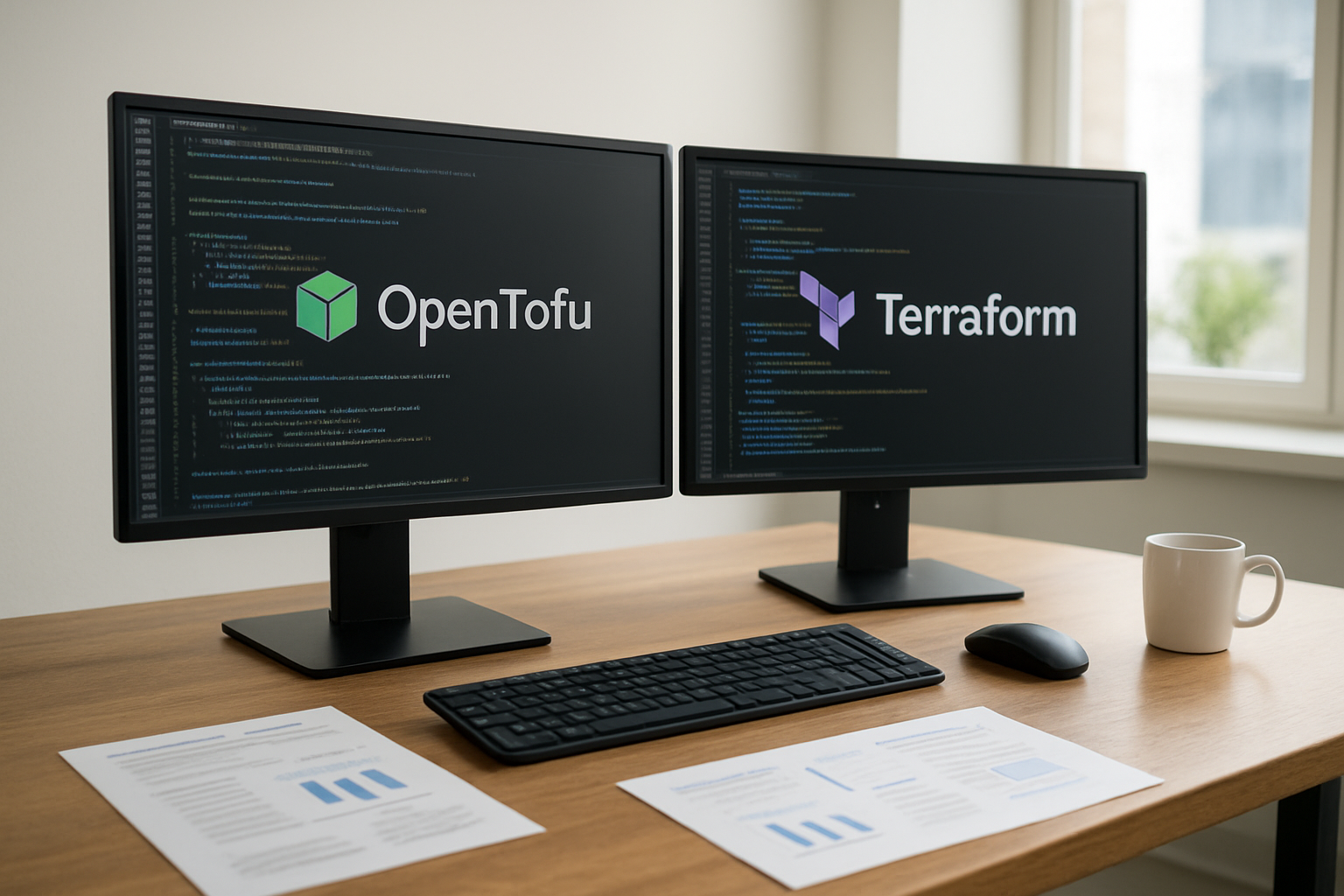
What OpenTofu Brings to Infrastructure Management
OpenTofu emerged as a powerful fork of Terraform, born from the community's response to HashiCorp's license changes in 2023. This open-source infrastructure as code tool maintains full compatibility with Terraform's existing workflows while introducing enhanced features and governance models that prioritize transparency and community involvement.
The platform delivers the same declarative configuration management capabilities you'd expect from modern infrastructure automation tools. You can define your infrastructure using familiar HCL syntax, manage state files, and execute plan-and-apply workflows. OpenTofu supports all major cloud providers including AWS, Azure, Google Cloud, and hundreds of other providers through its extensive ecosystem.
What sets OpenTofu apart is its commitment to remaining truly open-source under the Mozilla Public License 2.0. This ensures the tool will always be freely available without vendor lock-in concerns. The project maintains backward compatibility with Terraform configurations, making migration straightforward for existing teams.
OpenTofu also introduces improved state management features, enhanced security controls, and better error handling compared to its predecessor. The tool includes native support for OpenTofu CI/CD pipelines, making it particularly well-suited for automated infrastructure deployment scenarios.
Key Benefits of Open-Source Infrastructure as Code
Open-source infrastructure as code brings several compelling advantages to modern development teams. Transparency stands as the primary benefit - you can inspect every line of code, understand exactly how your infrastructure management tool operates, and even contribute improvements back to the community.
The collaborative nature of open-source development means bugs get fixed faster and features evolve based on real-world usage patterns. Unlike proprietary solutions, you're not waiting for vendor roadmaps to align with your needs. The community actively contributes providers, modules, and integrations that expand functionality.
Security becomes more robust through community scrutiny. Thousands of developers review the codebase, identifying potential vulnerabilities before they impact production systems. This collective security model often surpasses what individual vendors can achieve through internal reviews alone.
Innovation happens at a different pace in open-source projects. New features and improvements emerge organically from user needs rather than business strategies. This results in tools that solve real problems rather than checking marketing boxes.
Cost Savings and Vendor Independence
The financial impact of choosing OpenTofu over commercial alternatives can be substantial, especially for growing organizations. You avoid licensing fees, subscription costs, and usage-based pricing models that can quickly escalate as your infrastructure scales.
Beyond direct cost savings, OpenTofu eliminates vendor lock-in scenarios that often trap organizations in expensive upgrade cycles. You're not forced to accept pricing changes, feature removals, or license modifications that don't serve your interests. The open-source model ensures the tool remains accessible regardless of corporate decisions made by external vendors.
Budget predictability improves significantly when your core infrastructure tooling isn't subject to annual price negotiations or surprise licensing changes. Teams can allocate resources toward infrastructure improvements rather than vendor management overhead.
The economic benefits extend to hiring and training as well. OpenTofu's compatibility with existing Terraform knowledge means your team's expertise transfers directly. You avoid the costs associated with learning entirely new toolsets while gaining the benefits of open-source flexibility.
Community-Driven Development and Support
OpenTofu's development model relies on community collaboration rather than corporate roadmaps. This approach creates a feedback loop where real-world usage directly influences feature development and bug fixes. Users become stakeholders in the tool's evolution rather than passive consumers.
The support ecosystem spans multiple channels including GitHub discussions, community forums, and extensive documentation maintained by contributors worldwide. When you encounter issues, solutions often come from practitioners who've faced similar challenges rather than support tickets routed through corporate hierarchies.
Professional services and commercial support options exist through various providers, giving organizations flexibility in choosing support models that match their needs. This competitive marketplace often results in better service levels and more responsive support compared to single-vendor scenarios.
The contributor ecosystem continues growing, with major cloud providers and technology companies actively participating in OpenTofu's development. This broad participation ensures the tool evolves to meet diverse infrastructure requirements across different industries and use cases.
Setting Up Your First OpenTofu CI/CD Pipeline

Essential Prerequisites and Environment Configuration
Before diving into your OpenTofu CI/CD pipeline setup, you'll need several key components in place. Your development team should have basic familiarity with infrastructure as code concepts and version control workflows. Most organizations already have these skills from working with similar tools.
Your CI/CD platform forms the foundation of your OpenTofu pipeline. Popular choices include Jenkins, GitLab CI/CD, GitHub Actions, Azure DevOps, or CircleCI. Each platform offers unique advantages, but the core OpenTofu integration patterns remain consistent across them.
Set up dedicated service accounts or authentication mechanisms for your pipeline. OpenTofu needs proper credentials to manage your cloud infrastructure, whether you're using AWS, Azure, Google Cloud, or other providers. Create IAM roles with minimal required permissions following the principle of least privilege.
Configure secure storage for your OpenTofu state files. Remote state backends like AWS S3, Azure Storage, or Terraform Cloud provide state locking and team collaboration features. Never store state files in your version control repository - this creates security risks and merge conflicts.
Plan your environment strategy early. Most teams use separate environments for development, staging, and production, each with its own state backend and variable configurations. This isolation prevents accidental changes to production resources during testing.
Installing OpenTofu in Your CI/CD Environment
Installing OpenTofu in your CI/CD environment requires choosing the right approach for your platform. Container-based installations offer the most consistency and portability across different CI/CD systems.
Docker provides the cleanest installation method. Use the official OpenTofu Docker images in your pipeline configurations:
docker:
  image: ghcr.io/opentofu/opentofu:latest
For Jenkins environments, install OpenTofu directly on build agents or use the Docker approach within pipeline steps. Create a dedicated tool installation script that your pipeline can reference:
#!/bin/bash
wget -O- https://get.opentofu.org/install-opentofu.sh | sh
export PATH=$PATH:/usr/local/bin
GitHub Actions users can leverage the setup-opentofu action from the marketplace, which handles installation and caching automatically. This approach reduces build times and ensures consistent OpenTofu versions across runs.
Pin specific OpenTofu versions in your pipeline configuration rather than using "latest" tags. This prevents unexpected breaking changes from disrupting your infrastructure deployments. Update versions deliberately through your standard change management process.
Configure your CI/CD agent or container to include any additional tools your OpenTofu configurations require, such as cloud CLI tools, kubectl, or custom scripts your modules depend on.
Configuring Version Control Integration
Version control integration forms the backbone of effective OpenTofu CI/CD pipelines. Structure your repository to support multiple environments and promote code reuse across your infrastructure components.
Organize your OpenTofu configurations using a consistent directory structure. Many teams adopt patterns like:
├── environments/
│   ├── dev/
│   ├── staging/
│   └── prod/
├── modules/
│   ├── networking/
│   ├── compute/
│   └── storage/
└── shared/
    ├── variables.tf
    └── providers.tf
Set up branch protection rules that require pull request reviews and successful CI checks before merging to main branches. This prevents direct pushes that could bypass your pipeline validations and potentially damage infrastructure.
Configure your pipeline to trigger on different events based on your workflow needs. Pull requests typically run plan operations to show proposed changes, while merges to main branches execute apply operations for actual infrastructure updates.
Implement proper .gitignore rules to exclude sensitive files like .terraform directories, state files, and credential files from version control. Include generated plan files and temporary directories in your ignore list.
Use conventional commit messages or pull request templates to maintain clear change documentation. Your team will appreciate detailed commit messages when troubleshooting infrastructure issues months later. Consider requiring specific formats for infrastructure changes that include affected resources and impact assessments.
Tag releases of your infrastructure code to match your application deployments. This creates clear reference points for rollbacks and helps correlate infrastructure changes with application releases during incident response.
Best Practices for OpenTofu Pipeline Architecture

Structuring Your Infrastructure Code Repositories
A well-organized repository structure forms the foundation of successful OpenTofu CI/CD pipelines. The key is creating a logical hierarchy that separates concerns while maintaining clear relationships between different infrastructure components.
Start by organizing your code into distinct directories based on functionality. Create separate folders for environments (dev, staging, production), shared modules, and configuration files. A typical structure might include /environments, /modules, /policies, and /scripts directories. This approach ensures team members can quickly locate and understand different parts of your infrastructure codebase.
Consider implementing a monorepo strategy for smaller teams or microrepo approach for larger organizations. Monorepos keep all infrastructure code in one place, simplifying dependency management and promoting code reuse. However, microrepos offer better access control and allow teams to work independently on specific infrastructure components.
Version control becomes critical when multiple team members contribute to infrastructure code. Establish clear branching strategies that align with your deployment workflows. Feature branches for infrastructure changes, coupled with pull request reviews, help catch issues before they reach production environments.
Implementing State Management and Backend Configuration
State management represents one of the most critical aspects of OpenTofu pipeline architecture. Proper backend configuration ensures your infrastructure state remains consistent and accessible across different pipeline executions.
Remote state backends provide essential benefits for CI/CD environments. S3 with DynamoDB locking, Azure Storage, or Google Cloud Storage offer reliable state storage with built-in versioning capabilities. Configure state locking to prevent concurrent modifications that could corrupt your infrastructure state.
terraform {
  backend "s3" {
    bucket         = "your-terraform-state-bucket"
    key            = "infrastructure/terraform.tfstate"
    region         = "us-west-2"
    dynamodb_table = "terraform-state-lock"
    encrypt        = true
  }
}
Separate state files for different environments prevent accidental cross-environment modifications. Each environment should maintain its own state file with distinct naming conventions. This isolation protects production resources from development changes while allowing independent scaling and configuration.
State file encryption and access controls protect sensitive infrastructure data. Enable encryption at rest and in transit for all state storage. Implement IAM policies that restrict state file access to authorized users and CI/CD systems only.
Creating Reusable Modules and Templates
Reusable modules transform OpenTofu pipeline efficiency by reducing code duplication and standardizing infrastructure patterns. Well-designed modules encapsulate common infrastructure components like VPCs, databases, or application clusters into configurable, testable units.
Design modules with clear interfaces using input variables and output values. Each module should focus on a single responsibility, such as creating a complete application environment or setting up monitoring infrastructure. This modularity makes testing easier and promotes consistent deployments across different environments.
Template modules for common patterns accelerate development cycles. Create standardized templates for web applications, databases, container clusters, and networking components. These templates should include security best practices, monitoring configurations, and compliance requirements by default.
Version your modules separately from your main infrastructure code. Use semantic versioning to communicate breaking changes and new features clearly. Store modules in dedicated repositories or registry systems that support version pinning in your main infrastructure configurations.
Testing modules independently improves pipeline reliability. Implement unit tests using tools like Terratest or kitchen-terraform to verify module behavior across different input combinations. Automated testing catches configuration errors before they impact production environments.
Establishing Environment Separation Strategies
Environment separation strategies prevent configuration drift and ensure consistent deployments across your infrastructure lifecycle. The goal is creating isolated environments that mirror production characteristics while maintaining cost efficiency and development speed.
Account-level separation provides the strongest isolation boundaries. Deploy development, staging, and production environments in separate cloud accounts or subscriptions. This approach prevents accidental resource access and simplifies security policy implementation. However, it requires more complex networking setup for inter-environment communication.
Workspace-based separation offers a lighter-weight alternative using OpenTofu workspaces. Each workspace maintains separate state files while sharing the same configuration code. This method works well for environments with similar resource requirements but different scaling needs.
Parameter-driven environments use variable files to customize deployments for different environments. Create environment-specific .tfvars files that override default values for instance sizes, replica counts, or feature flags. This approach minimizes code duplication while allowing environment-specific optimizations.
Implement automated environment provisioning through your CI/CD pipelines. Use infrastructure as code to create the environments themselves, including networking, security groups, and base services. This "infrastructure of infrastructure" approach ensures consistent environment setup and simplifies disaster recovery scenarios.
Resource naming conventions become essential when managing multiple environments. Implement consistent prefixes or suffixes that clearly identify environment membership. Tags provide additional metadata for cost tracking, compliance reporting, and automated resource management across your OpenTofu CI/CD workflows.
Automating Infrastructure Deployment with OpenTofu

Building Automated Plan and Apply Workflows
Creating robust automated workflows for OpenTofu infrastructure deployment requires careful orchestration of plan and apply operations. The foundation of any effective OpenTofu CI/CD pipeline lies in establishing clear separation between planning and execution phases.
Start by implementing a two-stage workflow where the plan operation runs automatically on pull requests, generating detailed previews of infrastructure changes. This approach allows team members to review proposed modifications before they reach production environments. Configure your pipeline to store plan files as artifacts, ensuring consistency between what gets reviewed and what eventually gets applied.
For the apply phase, implement approval gates that require manual intervention for production deployments. Popular CI/CD platforms like GitHub Actions, GitLab CI, or Jenkins can trigger apply operations only after designated reviewers approve the planned changes. Set up branch protection rules that prevent direct pushes to main branches, forcing all infrastructure changes through the review process.
Consider implementing environment-specific workflows where development environments allow automatic applies while staging and production require manual approvals. This tiered approach balances development velocity with operational safety.
Configure your workflows to handle workspace management automatically. Use workspace switching commands to ensure deployments target the correct environment, and implement workspace cleanup procedures to prevent state drift between different infrastructure environments.
Implementing Infrastructure Validation and Testing
Infrastructure validation goes beyond basic syntax checking - it involves comprehensive testing strategies that catch potential issues before they impact production systems. OpenTofu supports multiple validation approaches that integrate seamlessly into CI/CD infrastructure deployment workflows.
Implement pre-deployment validation using tofu validate and tofu fmt commands to catch configuration errors and formatting inconsistencies. These lightweight checks run quickly and catch common mistakes early in the pipeline. Add custom validation rules using OpenTofu's built-in validation blocks to enforce organizational standards like naming conventions, required tags, or resource limits.
Set up infrastructure testing using tools like Terratest or Kitchen-Terraform to verify that deployed resources meet functional requirements. These tools can spin up temporary infrastructure, run tests against it, and tear it down automatically. Write tests that verify network connectivity, security group configurations, and application deployments to ensure infrastructure changes don't break existing functionality.
Integrate policy-as-code tools like Open Policy Agent (OPA) or Checkov to enforce compliance requirements. These tools scan OpenTofu configurations against predefined policies, preventing deployment of non-compliant infrastructure. Create policies that check for security misconfigurations, cost optimization opportunities, and regulatory compliance requirements.
Implement drift detection by running regular plan operations against existing infrastructure. Configure scheduled pipeline runs that compare current infrastructure state with the desired configuration, alerting teams when manual changes create configuration drift that needs attention.
Managing Secrets and Sensitive Variables Securely
Securing sensitive information in OpenTofu pipelines requires a multi-layered approach that protects credentials, API keys, and other confidential data throughout the deployment process. Never store sensitive values directly in OpenTofu configuration files or commit them to version control systems.
Leverage your CI/CD platform's native secret management capabilities to store sensitive variables. GitHub Actions Secrets, GitLab CI Variables, and Jenkins Credentials provide encrypted storage for sensitive data that gets injected into pipeline environments at runtime. Configure these secrets with appropriate access controls, limiting visibility to specific repositories, branches, or user groups.
Integrate external secret management solutions like HashiCorp Vault, AWS Secrets Manager, or Azure Key Vault for enterprise-grade secret handling. These systems provide centralized secret storage, automatic rotation capabilities, and detailed audit logging. Configure OpenTofu to retrieve secrets dynamically during execution rather than storing them in pipeline configurations.
Use environment-specific variable files and configure your pipeline to select the appropriate file based on the deployment target. Store these files outside your main repository or encrypt them using tools like git-crypt or SOPS (Secrets OPerationS) to protect sensitive values while maintaining version control benefits.
Implement secret rotation procedures that update credentials regularly without disrupting active deployments. Configure your pipeline to handle credential updates gracefully, using techniques like blue-green deployments to minimize downtime during secret rotation cycles.
Set up monitoring and alerting for secret access patterns to detect potential security incidents. Log secret retrieval operations and configure alerts for unusual access patterns or failed authentication attempts that might indicate compromised credentials.
Monitoring and Troubleshooting OpenTofu Pipelines

Setting Up Comprehensive Logging and Alerting
Effective monitoring starts with robust logging infrastructure. Configure OpenTofu CI/CD pipelines to capture detailed execution logs at multiple levels - from plan generation to resource provisioning. Set up structured logging using JSON format to enable easier parsing and analysis.
Enable Terraform debug logging by setting TF_LOG=DEBUG environment variable during pipeline execution. This provides granular insights into provider interactions, resource state changes, and API calls. Store these logs in centralized systems like ELK Stack, CloudWatch, or Azure Monitor for long-term analysis.
Configure alerting rules for critical pipeline events:
-
Failed plan or apply operations
-
State file corruption or locking issues
-
Provider authentication failures
-
Resource drift detection
-
Execution time exceeding thresholds
Create notification channels that integrate with your team's workflow - Slack, Microsoft Teams, or PagerDuty. Set up escalation policies for different severity levels to ensure critical infrastructure issues get immediate attention.
Debugging Common Pipeline Failures
OpenTofu pipeline failures typically fall into predictable categories. State file conflicts occur when multiple pipeline runs attempt concurrent operations. Implement proper state locking mechanisms and configure retry logic with exponential backoff.
Provider version mismatches cause frequent headaches. Pin provider versions explicitly in your configuration files and maintain version compatibility matrices. When debugging, check provider logs for authentication errors, rate limiting, or API deprecation warnings.
Resource dependency failures often stem from implicit dependencies that OpenTofu can't automatically detect. Use explicit depends_on declarations and review your resource graph with tofu graph command. For complex deployments, consider breaking down large configurations into smaller, manageable modules.
Network connectivity issues in CI/CD environments require special attention. Configure proper proxy settings, ensure firewall rules allow necessary traffic, and implement health checks for external dependencies before running infrastructure operations.
Performance Optimization Techniques
OpenTofu pipeline performance directly impacts deployment velocity and developer productivity. Implement parallelism tuning by adjusting the -parallelism flag based on your infrastructure complexity and provider rate limits. Most cloud providers handle 10-20 concurrent operations efficiently.
Cache provider plugins and modules to reduce download overhead. Configure your CI/CD system to persist .terraform directories between runs when safe to do so. Use Docker images with pre-installed providers for consistent execution environments.
Optimize state file operations by:
-
Using remote state backends with built-in locking
-
Implementing state file compression for large infrastructures
-
Configuring appropriate refresh intervals
-
Splitting large monolithic configurations into focused modules
Enable plan file caching to avoid regenerating execution plans when configurations haven't changed. This significantly reduces pipeline execution time for environments with frequent but minor updates.
Rollback Strategies for Failed Deployments
Robust rollback capabilities distinguish professional OpenTofu CI/CD implementations from basic setups. Implement automated rollback triggers based on health check failures, monitoring alerts, or deployment validation results.
Maintain infrastructure snapshots before major changes. For cloud resources, create point-in-time backups of databases, configuration files, and critical application state. Document rollback procedures for complex multi-service deployments.
Use blue-green deployment patterns where feasible. Provision new infrastructure alongside existing resources, validate functionality, then switch traffic. This approach minimizes downtime and provides immediate rollback capability.
Configure pipeline stages with manual approval gates for production deployments. Include rollback decision points in your workflow, allowing teams to abort deployments based on real-time monitoring data or business requirements.
Implement infrastructure versioning using Git tags or semantic versioning. Maintain deploy scripts that can target specific infrastructure versions, enabling quick recovery to known-good configurations when issues arise.
Advanced OpenTofu CI/CD Integration Patterns

Multi-Cloud Infrastructure Management
Managing infrastructure across multiple cloud providers becomes straightforward with OpenTofu CI/CD pipelines. You can deploy resources to AWS, Google Cloud, and Azure simultaneously using a single configuration, giving your organization flexibility and reducing vendor lock-in risks.
Create separate modules for each cloud provider while maintaining consistent naming conventions and resource tagging. Your pipeline can execute these modules in parallel, dramatically reducing deployment times. Consider using different state backends for each cloud to isolate failures and enable independent scaling.
# Multi-cloud module structure
modules/
├── aws/
├── gcp/
├── azure/
└── shared/
Set up environment-specific variables to control which clouds receive deployments. Your staging environment might only use AWS, while production spans all three providers. This approach lets you test changes safely before rolling them out to your complete multi-cloud setup.
Pipeline orchestration becomes critical when coordinating deployments across providers. Use dependency management to ensure shared resources like DNS records deploy before provider-specific infrastructure. Matrix builds in your CI/CD system can run cloud-specific jobs concurrently while respecting these dependencies.
GitOps Workflows with Pull Request Reviews
GitOps transforms your OpenTofu infrastructure deployment process by making Git your single source of truth. Every infrastructure change goes through pull requests, creating an audit trail and enabling collaborative review processes.
Configure your repository with branch protection rules that require at least two reviewers for infrastructure changes. Set up automated checks that run tofu plan on every pull request, showing reviewers exactly what changes will happen before they approve the merge.
| GitOps Component | Purpose | Implementation |
|---|---|---|
| Feature Branch | Isolate changes | Create from main for each update |
| PR Reviews | Peer validation | Require 2+ approvers |
| Plan Preview | Show changes | Auto-comment on PR |
| Merge Deploy | Execute changes | Trigger on main branch |
Your pipeline should automatically apply changes only after successful merge to the main branch. This creates a clear separation between planning (in PRs) and execution (in main), reducing the risk of unauthorized infrastructure modifications.
Implement automated rollback mechanisms by maintaining infrastructure snapshots. When deployments fail, your pipeline can automatically revert to the last known good state while alerting the team about the issue.
Policy as Code Implementation
Policy as Code brings governance and compliance directly into your OpenTofu integration patterns. Tools like Open Policy Agent (OPA) integrate seamlessly with your pipelines to enforce security standards, cost controls, and organizational policies before infrastructure deployment.
Write policies in Rego that check for common security misconfigurations like open security groups, unencrypted storage, or missing resource tags. Your pipeline evaluates these policies during the planning phase, preventing non-compliant infrastructure from reaching production.
# Example policy: Ensure S3 buckets are encrypted
package terraform.s3

deny[msg] {
    resource := input.resource_changes[_]
    resource.type == "aws_s3_bucket"
    not resource.change.after.server_side_encryption_configuration
    msg := "S3 bucket must have encryption enabled"
}
Create different policy sets for different environments. Development might have relaxed cost controls, while production enforces strict security and compliance rules. Your pipeline can automatically select the appropriate policy set based on the target environment.
Integration with compliance frameworks becomes automatic when you codify policies. Map your Rego rules to specific compliance requirements like SOC 2 or GDPR, generating compliance reports as part of your deployment process. This approach transforms compliance from a manual audit process into continuous validation.

OpenTofu has proven itself as a powerful alternative to Terraform, offering the same robust infrastructure as code capabilities without the licensing concerns. We've walked through everything from setting up your first pipeline to implementing advanced integration patterns, showing how OpenTofu can streamline your deployment process while keeping costs down. The monitoring and troubleshooting strategies we covered will help you catch issues early and maintain reliable infrastructure deployments.
The time to make the switch is now. Start small with a simple OpenTofu pipeline for a non-critical environment, then gradually expand as your team gets comfortable with the tools and workflows. Your infrastructure deployments will become more predictable, your team will have better visibility into changes, and you'll sleep better knowing your CI/CD pipeline is built on solid, open-source foundations. Give OpenTofu a try in your next project – you might be surprised at how seamlessly it fits into your existing workflow.


Comments
Post a Comment