Managing APIs at Scale with Kong Gateway and Kubernetes
Modern applications rely on dozens or hundreds of APIs, creating complex management challenges that can slow down your entire development pipeline. For DevOps engineers, platform architects, and engineering teams running microservices in production, Kong Gateway API management with Kubernetes API infrastructure offers a powerful solution to handle API traffic at enterprise scale.
This guide is designed for technical teams already familiar with Kubernetes who need to implement robust API management without sacrificing performance or security. You’ll learn practical approaches that real engineering teams use to manage hundreds of APIs serving millions of requests daily.
We’ll walk through Kong Kubernetes integration fundamentals, showing you how to deploy and configure Kong as your primary API gateway. You’ll discover advanced strategies for microservices API management, including traffic routing, rate limiting, and authentication patterns that scale with your business. Finally, we’ll cover enterprise API security and API performance optimization techniques that keep your systems running smoothly under heavy load.
Understanding Kong Gateway’s Role in API Management
Core Features That Streamline API Operations
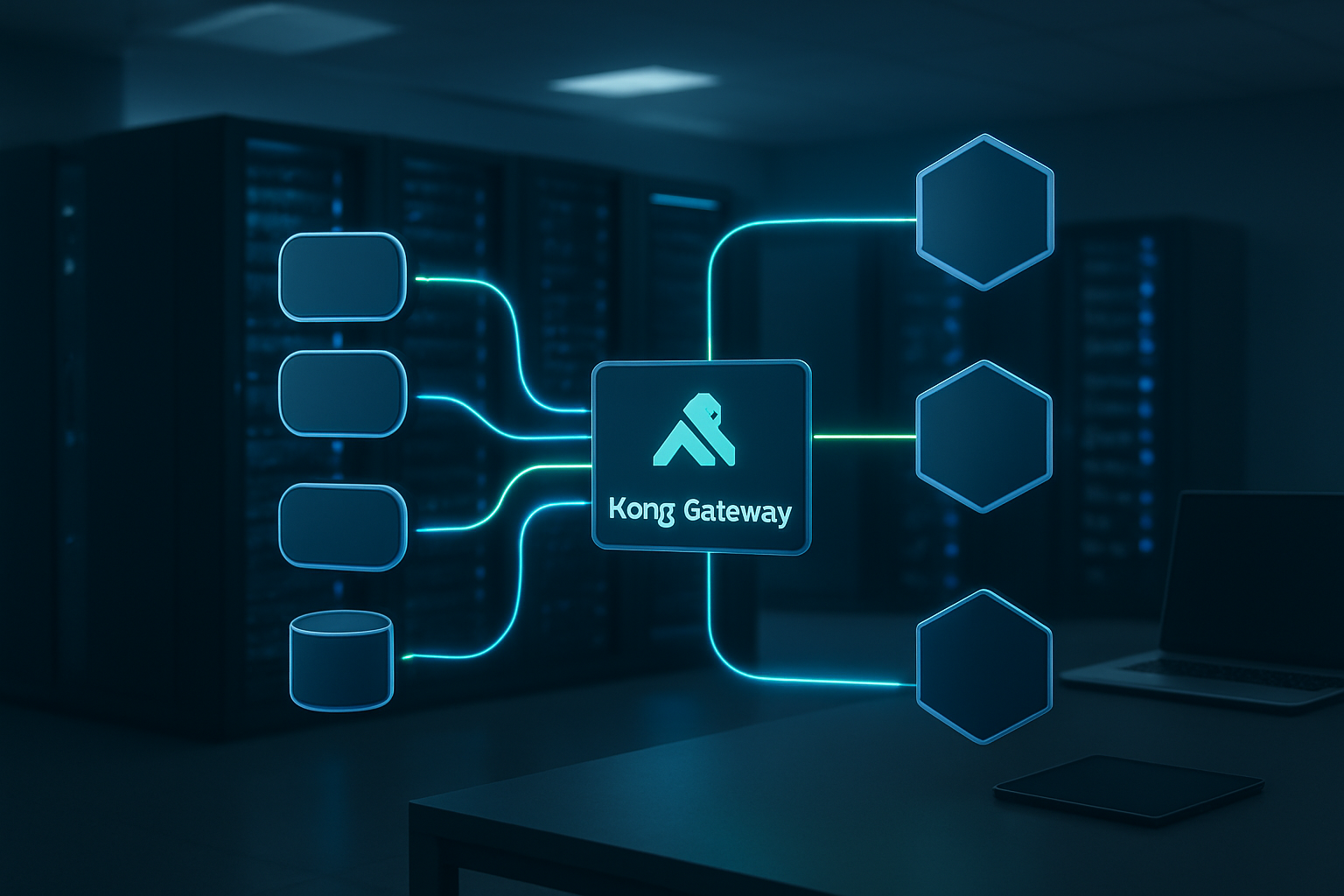
Kong Gateway API management transforms how organizations handle their microservices communication by providing a centralized control layer that sits between clients and backend services. The platform acts as a reverse proxy, intercepting every API request and response while applying policies, transformations, and monitoring capabilities without requiring changes to existing applications.
Load balancing capabilities automatically distribute incoming requests across multiple service instances, ensuring optimal resource utilization and preventing any single service from becoming overwhelmed. Kong’s intelligent routing algorithms can direct traffic based on various factors including request headers, geographic location, or custom business logic, making it perfect for complex deployment scenarios.
Service discovery integration allows Kong to automatically detect new services as they come online in your Kubernetes cluster. This dynamic approach eliminates manual configuration updates and reduces the operational overhead typically associated with traditional API management solutions. The gateway maintains real-time awareness of service health and availability, automatically removing unhealthy instances from the rotation.
Request and response transformation features enable seamless integration between services that might use different data formats or API contracts. Kong can modify headers, convert JSON to XML, aggregate multiple backend calls into single responses, or inject authentication tokens – all without touching the actual service code.
The plugin architecture extends functionality through a rich ecosystem of pre-built plugins or custom solutions. Popular plugins handle everything from request logging and analytics to advanced caching mechanisms, providing flexibility that scales with organizational needs.
Built-in Security and Authentication Capabilities
Enterprise API security becomes manageable through Kong’s comprehensive security layer that protects against common vulnerabilities while maintaining high performance standards. The gateway implements multiple authentication strategies including OAuth 2.0, JWT tokens, API keys, and basic authentication, allowing organizations to choose the most appropriate method for each service or client type.
Rate limiting and request throttling prevent abuse and ensure fair resource allocation across different client tiers. These controls can be applied globally, per-service, or per-consumer, giving administrators granular control over API access patterns. Advanced rate limiting algorithms consider factors like client identity, request complexity, and time-of-day usage patterns.
IP restriction and whitelist/blacklist functionality provides network-level security controls, blocking traffic from suspicious sources or limiting access to trusted networks. Geographic filtering capabilities enable compliance with data sovereignty requirements by restricting access based on client location.
Request validation ensures that incoming API calls conform to expected schemas and data types before reaching backend services. This proactive approach reduces the attack surface and prevents malformed requests from causing service disruptions or security breaches.
SSL termination and certificate management simplify the deployment of secure HTTPS endpoints across your entire API ecosystem. Kong handles certificate provisioning, renewal, and rotation automatically, reducing the operational burden on development teams.
Traffic Management and Rate Limiting Benefits
Kong Gateway’s traffic management capabilities provide the foundation for reliable, scalable API infrastructure that can handle enterprise-level demand while maintaining consistent performance characteristics. Circuit breaker patterns automatically detect failing services and redirect traffic to healthy alternatives, preventing cascade failures that could impact the entire system.
Intelligent caching mechanisms reduce backend load by storing frequently requested responses at the gateway level. Cache invalidation strategies ensure data consistency while maximizing performance benefits. The system can cache responses based on request parameters, headers, or custom business logic, adapting to different usage patterns across various API endpoints.
Quality of Service (QoS) controls prioritize critical traffic during peak usage periods, ensuring that essential business functions remain responsive even when the system experiences high load. Traffic shaping capabilities smooth out request bursts and prevent sudden spikes from overwhelming backend services.
Health checking functionality continuously monitors service availability and performance metrics, automatically removing degraded instances from the load balancing pool. This proactive approach maintains system reliability without requiring manual intervention from operations teams.
Retry logic and timeout controls provide resilience against temporary service disruptions. Kong can automatically retry failed requests using exponential backoff algorithms, while configurable timeouts prevent hung connections from consuming valuable system resources. These features work together to create a robust API infrastructure that gracefully handles various failure scenarios.
Kubernetes Architecture Advantages for API Infrastructure

Container Orchestration for Seamless API Deployment
Kubernetes transforms how we deploy and manage APIs by treating each service as a containerized unit. When you’re running Kong Gateway on Kubernetes, you get automatic deployment workflows that handle everything from rolling updates to service discovery without manual intervention. The platform manages your API gateway instances across multiple nodes, ensuring your Kong pods stay healthy and responsive.
Container orchestration simplifies the complexity of managing distributed API infrastructure. Your Kong Gateway configuration gets packaged into containers that can spin up anywhere in your cluster. This approach eliminates the “it works on my machine” problem and gives you consistent deployments across development, staging, and production environments.
The real power shows up when you need to deploy new API versions or update gateway configurations. Kubernetes handles blue-green deployments and canary releases natively, letting you test new Kong configurations with minimal risk. You can roll out changes gradually, monitor performance metrics, and roll back instantly if something goes wrong.
Auto-scaling Capabilities for Variable Traffic Demands
Traffic patterns for APIs are rarely predictable. One minute you’re handling baseline requests, the next you’re dealing with a sudden spike from a viral social media post or a flash sale. Kubernetes API infrastructure excels at handling these fluctuations through horizontal pod autoscaling (HPA) and vertical pod autoscaling (VPA).
HPA monitors CPU usage, memory consumption, and custom metrics like request latency to automatically spin up additional Kong Gateway pods when demand increases. This means your API gateway scaling happens in real-time based on actual traffic patterns rather than guesswork or manual intervention.
The integration between Kong and Kubernetes makes this scaling intelligent. The system can scale not just the gateway instances but also the backend services behind them. When your API endpoints start getting hammered, Kubernetes can scale both the Kong ingress controller and your microservices simultaneously, maintaining optimal performance across the entire request chain.
Custom metrics scaling takes this even further. You can configure scaling rules based on queue depth, response times, or business-specific metrics that matter to your API consumers. This level of granular control ensures you’re always running the right amount of infrastructure for current demand.
High Availability Through Distributed System Design
Building resilient API infrastructure requires eliminating single points of failure, and Kubernetes excels at this through its distributed architecture. Your Kong Gateway instances run across multiple nodes, and if one node fails, traffic automatically routes to healthy instances without service interruption.
The distributed system design extends beyond just the gateway layer. Kubernetes manages etcd clusters for configuration storage, ensures multiple replicas of critical services, and provides automatic failover mechanisms. When you combine this with Kong’s ability to cache routing decisions and API policies, you get an incredibly robust system that can handle various failure scenarios.
Pod disruption budgets add another layer of protection. You can specify that a minimum number of Kong pods must always remain available during maintenance windows or unexpected node failures. This prevents scenarios where routine cluster updates could accidentally take down your entire API gateway.
Health checks and readiness probes ensure traffic only reaches Kong instances that are fully operational. The platform continuously monitors gateway health and removes unhealthy pods from the load balancer rotation before they can impact API consumers.
Resource Optimization and Cost Efficiency
Running Kong Gateway on Kubernetes gives you granular control over resource allocation and utilization. Instead of provisioning large, monolithic servers that sit mostly idle, you can right-size your API gateway deployments based on actual usage patterns.
Resource quotas and limits prevent any single Kong pod from consuming excessive CPU or memory, protecting other services in your cluster. You can also implement quality of service classes to ensure critical API traffic gets priority access to system resources during periods of high demand.
The cost benefits become significant at enterprise scale. Kubernetes enables bin-packing of workloads, meaning you can run multiple services on the same hardware more efficiently. Your Kong Gateway pods can share nodes with other applications, maximizing infrastructure utilization while maintaining proper isolation.
Cluster autoscaling takes cost optimization further by automatically adding or removing nodes based on actual resource demands. During low-traffic periods, the system can consolidate workloads and scale down unnecessary infrastructure, reducing cloud costs without impacting service availability.
Spot instances and preemptible VMs become viable options for non-critical Kong Gateway replicas when you have proper redundancy in place. This can dramatically reduce infrastructure costs while maintaining the performance and availability your APIs require.
Integrating Kong Gateway with Kubernetes Clusters

Installation Methods and Best Practices
Kong Gateway offers multiple installation paths for Kubernetes environments, each tailored to different operational requirements and organizational preferences. The most straightforward approach involves deploying Kong as a Kubernetes ingress controller using Helm charts, which streamlines the initial setup and provides automated configuration management.
The traditional deployment method uses Kong’s native Kubernetes manifests, giving teams granular control over resource allocation and networking configurations. This approach works well when you need custom network policies or specific resource constraints. Database-backed deployments require PostgreSQL integration, while DB-less modes simplify operations by storing configuration in Kubernetes ConfigMaps and Secrets.
For production environments, consider these deployment strategies:
- Dedicated Kong namespaces to isolate API gateway resources from application workloads
- Multi-zone deployments for high availability across different Kubernetes nodes
- Resource quotas and limits to prevent Kong pods from consuming excessive cluster resources
- Pod disruption budgets to maintain service availability during cluster maintenance
Container image selection matters significantly for Kong Kubernetes integration. Alpine-based images reduce attack surface and startup time, while Ubuntu-based images provide better debugging capabilities. Always pin specific image versions rather than using latest tags to ensure consistent deployments across environments.
Network policies should restrict Kong’s communication patterns, allowing inbound traffic only from designated sources and outbound connections to necessary services. This security-first approach prevents unauthorized access while maintaining operational flexibility.
Configuration Management Through Kubernetes Resources
Kong Gateway configuration in Kubernetes leverages native Kubernetes resources, transforming traditional API management into cloud-native operations. The Kong Ingress Controller translates standard Kubernetes resources like Ingress, Service, and custom KongIngress resources into Kong’s internal configuration, creating a seamless bridge between Kubernetes networking and Kong’s advanced API management features.
KongPlugin resources enable sophisticated API behaviors without leaving the Kubernetes ecosystem. These custom resources define rate limiting, authentication, request transformation, and other Kong plugins using familiar YAML syntax. Configuration changes deploy through standard kubectl apply commands, integrating naturally with GitOps workflows and CI/CD pipelines.
ConfigMaps store Kong’s declarative configuration when running in DB-less mode, eliminating external database dependencies. This approach simplifies deployment architecture and reduces operational overhead. The configuration updates through Kubernetes rolling updates, ensuring zero-downtime configuration changes.
Secret management integrates with Kubernetes native secrets for storing sensitive configuration data like API keys, certificates, and database credentials. Kong automatically mounts these secrets and updates configurations when secret values change.
Key configuration patterns include:
- KongIngress annotations for fine-tuning upstream behavior and protocol settings
- Service-level configurations using KongPlugin resources attached to Kubernetes services
- Global configurations through KongClusterPlugin resources that apply across multiple services
- Environment-specific overlays using Kustomize or Helm values for different deployment stages
The declarative approach ensures configuration consistency across environments and enables version control of API policies alongside application code.
Service Discovery and Load Balancing Setup
Kong Gateway’s Kubernetes integration provides automatic service discovery, eliminating manual upstream configuration and reducing operational complexity. The system monitors Kubernetes Service resources and automatically registers endpoints as Kong upstreams, creating dynamic service meshes that adapt to pod scaling and deployment changes.
Service discovery operates through Kubernetes API server integration, where Kong continuously watches for service and endpoint changes. When pods scale up or down, Kong immediately updates its internal load balancing configuration, ensuring traffic routes to healthy instances without manual intervention. This real-time synchronization maintains service availability during deployments and auto-scaling events.
Load balancing algorithms in Kong support various distribution strategies optimized for different application patterns. Round-robin works well for stateless applications, while consistent hashing maintains session affinity for stateful services. Weighted round-robin enables gradual traffic shifting during blue-green deployments or canary releases.
Health checking integration uses Kubernetes readiness and liveness probes to determine service health. Kong respects these probe configurations and automatically removes unhealthy pods from the load balancing pool. Custom health check endpoints can supplement Kubernetes probes for more sophisticated health monitoring.
Advanced load balancing features include:
- Circuit breaker patterns that prevent cascade failures by temporarily removing failing services
- Retry policies with exponential backoff for handling transient failures
- Connection pooling to optimize resource usage and reduce latency
- Geographic routing for multi-region deployments using node labels and affinity rules
The service mesh capabilities extend beyond basic load balancing to include traffic splitting for A/B testing, request mirroring for testing new service versions, and failover mechanisms for disaster recovery scenarios.
Kong’s upstream health monitoring provides detailed metrics about service performance, error rates, and response times. These metrics integrate with Prometheus and other monitoring systems for comprehensive observability across the entire API infrastructure.
Implementing Advanced API Management Strategies

Multi-environment Deployment Pipelines
Building robust multi-environment deployment pipelines with Kong Gateway and Kubernetes requires careful orchestration across development, staging, and production environments. Kong Gateway configuration becomes the backbone of your API infrastructure, maintaining consistency while allowing environment-specific customizations.
Start by establishing separate Kubernetes namespaces for each environment, with dedicated Kong Gateway instances handling traffic routing and policy enforcement. Kong’s declarative configuration approach using decK (declarative configuration tool) enables version-controlled API gateway settings across all environments. This ensures your development team can test API configurations before promoting them to production.
Your pipeline should automate Kong Gateway configuration deployment alongside application releases. GitOps workflows work particularly well here – commit Kong configuration changes to your repository, and CI/CD tools automatically apply them to the appropriate environment. This approach eliminates manual configuration drift and provides audit trails for compliance requirements.
Consider using Kubernetes ConfigMaps and Secrets to manage environment-specific variables like upstream service URLs, authentication keys, and rate limiting thresholds. Kong’s plugin configuration can reference these resources dynamically, making your deployment pipeline more flexible and secure.
Blue-Green Deployment Techniques for Zero Downtime
Blue-green deployments with Kong Gateway eliminate service interruptions during application updates. This strategy maintains two identical production environments – blue (current) and green (new) – switching traffic between them seamlessly.
Kong’s upstream service configuration plays a crucial role in blue-green deployments. Configure two upstream targets pointing to your blue and green environments, adjusting weights to control traffic distribution. During deployment, gradually shift traffic from blue to green while monitoring application health and performance metrics.
Kubernetes service discovery simplifies upstream management. Deploy your application to different services or use label selectors to distinguish between blue and green versions. Kong automatically discovers healthy endpoints through Kubernetes integration, removing the need for manual upstream configuration updates.
Health checks become critical in blue-green scenarios. Configure Kong’s health checking plugins to monitor both environments continuously. If the green environment shows issues after switching, you can instantly revert traffic to the blue environment by updating upstream weights or switching service targets.
Database migrations require special attention during blue-green deployments. Design backward-compatible schema changes that work with both application versions, or use separate database instances for each environment during complex migrations.
Canary Releases for Risk-free Feature Rollouts
Canary releases with Kong Gateway provide granular control over feature rollouts, reducing deployment risks while gathering real-world performance data. Kong’s traffic splitting capabilities enable sophisticated canary strategies beyond simple percentage-based routing.
Implement header-based canary routing for internal testing teams. Configure Kong’s request transformer plugin to identify specific headers (like user roles or beta flags) and route those requests to canary versions. This approach allows controlled testing without affecting regular users.
Geographic canary releases work well for global applications. Use Kong’s IP restriction plugin combined with traffic splitting to roll out features to specific regions first. Monitor regional performance metrics and gradually expand the rollout based on success criteria.
A/B testing becomes straightforward with Kong’s flexible routing rules. Route traffic based on user segments, session cookies, or custom headers to compare different feature implementations. Kong Gateway’s analytics plugins capture detailed metrics for statistical analysis.
Set up automated rollback mechanisms using Kong’s circuit breaker plugin. If error rates exceed predefined thresholds during canary deployment, automatically route all traffic back to the stable version while alerting your operations team.
Monitoring and Observability Implementation
Comprehensive monitoring transforms Kong Gateway from a simple proxy into a powerful observability platform for your API infrastructure. Kong’s built-in metrics combined with Kubernetes monitoring tools provide complete visibility into API performance and usage patterns.
Deploy Prometheus alongside your Kong Gateway installation to collect detailed metrics. Kong’s Prometheus plugin exposes request latency, error rates, throughput, and upstream service health data. Configure custom dashboards in Grafana to visualize API performance trends and identify bottlenecks before they impact users.
Distributed tracing becomes essential at scale. Kong’s Zipkin and Jaeger plugins instrument API requests across microservices, providing end-to-end visibility into request flows. This capability proves invaluable when troubleshooting performance issues in complex service architectures.
Log aggregation through Kong’s logging plugins feeds centralized systems like Elasticsearch or Splunk. Structure your logs to capture request context, user identification, and error details. This data supports both real-time alerting and historical analysis for capacity planning.
Set up intelligent alerting based on business-critical metrics rather than just system health. Monitor API usage patterns, authentication failures, and rate limit violations to detect potential security threats or service degradation early.
Kong Gateway’s real-time dashboard provides immediate visibility into API gateway health, but automated alerting ensures your team responds quickly to issues. Configure alerts for high error rates, increased latency, and upstream service failures to maintain optimal user experience.
Security and Compliance at Enterprise Scale

API Authentication and Authorization Frameworks
Kong Gateway provides robust authentication and authorization mechanisms that scale seamlessly across Kubernetes environments. The platform supports multiple authentication plugins including JWT, OAuth 2.0, API keys, and LDAP integration, allowing organizations to implement layered security strategies based on their specific requirements.
When deploying Kong Gateway with Kubernetes, you can leverage native RBAC (Role-Based Access Control) integration to create granular permission structures. This approach enables fine-tuned access control where different API consumers receive appropriate access levels based on their roles and responsibilities. The Kong ingress controller automatically synchronizes authentication policies across all pods, ensuring consistent security enforcement throughout your microservices API management infrastructure.
Advanced authorization frameworks in Kong support dynamic policy evaluation through custom Lua scripts and external authorization services. These capabilities allow real-time decision making based on contextual information like IP geolocation, request patterns, or external identity providers. The system can integrate with enterprise identity management solutions, creating a unified authentication experience across your entire API ecosystem.
Rate limiting and throttling policies work alongside authentication frameworks to prevent abuse and ensure fair resource allocation. Kong’s distributed rate limiting capabilities sync across Kubernetes nodes, providing accurate throttling even in high-traffic scenarios where requests might hit different gateway instances.
Data Protection and Encryption Standards
Data protection in Kong Gateway centers around comprehensive encryption standards that protect information both in transit and at rest. All API traffic flowing through Kong can be secured using TLS 1.3 encryption, with automatic certificate management through integration with cert-manager on Kubernetes clusters. This setup ensures that sensitive data remains protected throughout its journey across your microservices architecture.
Kong supports field-level encryption and tokenization through specialized plugins that can selectively encrypt specific data elements before they reach downstream services. This capability proves especially valuable for handling PII (Personally Identifiable Information) and financial data, where regulatory requirements demand granular protection measures.
The platform implements secure key management practices through integration with Kubernetes secrets and external key management systems like HashiCorp Vault or AWS KMS. Keys rotate automatically based on configurable policies, reducing the risk of long-term key exposure. Secret management extends to database credentials, API keys, and certificates used by Kong Gateway configuration.
Data loss prevention (DLP) plugins can scan outgoing responses for sensitive patterns, automatically redacting or blocking potentially harmful data leaks. These plugins work in real-time without significantly impacting API performance, making them suitable for high-throughput enterprise API security requirements.
Compliance Monitoring and Audit Trail Management
Comprehensive audit logging captures every API request, response, and administrative action within your Kong Gateway deployment. These logs integrate seamlessly with centralized logging systems like ELK Stack or Splunk, providing searchable audit trails that meet regulatory compliance requirements for industries like healthcare, finance, and government.
Kong’s logging plugins generate structured audit data including request timestamps, user identities, accessed resources, and response codes. This information gets automatically enriched with Kubernetes metadata such as pod names, namespaces, and service labels, creating detailed context for compliance reporting and forensic analysis.
Real-time compliance monitoring alerts trigger when suspicious activities occur, such as unusual access patterns, failed authentication attempts, or policy violations. These alerts integrate with existing incident response workflows through webhooks and notification systems, enabling rapid response to potential security breaches.
The platform maintains immutable audit records through integration with blockchain-based systems or write-once storage solutions. This approach ensures audit trail integrity for regulatory examinations and legal proceedings. Automated compliance reporting generates regular summaries of API usage patterns, security events, and policy adherence metrics that auditors and compliance officers can easily review.
Data retention policies automatically archive or purge audit logs based on regulatory requirements, balancing compliance needs with storage costs. The system supports both automated and manual retention controls, giving organizations flexibility in managing their audit data lifecycle.
Performance Optimization and Troubleshooting

Latency Reduction Techniques and Caching Strategies
Kong Gateway API management excels at reducing response times through intelligent caching mechanisms. Implementing proxy caching at the gateway level prevents redundant upstream requests, significantly improving API performance optimization. Configure response caching plugins to store frequently requested data for specified durations, reducing backend load by up to 80% for read-heavy workloads.
Rate limiting plugins work hand-in-hand with caching strategies to prevent upstream overload while maintaining optimal performance. Set up Redis-backed caching clusters within your Kubernetes API infrastructure to share cached responses across multiple Kong Gateway instances. This distributed approach ensures consistent performance even during pod restarts or scaling events.
Database query optimization becomes critical when managing thousands of API endpoints. Configure connection pooling settings to reuse database connections efficiently, reducing connection overhead. Memory-based caching for authentication tokens and session data eliminates repeated database lookups, cutting authentication latency by milliseconds that compound across high-traffic scenarios.
Bottleneck Identification and Resolution Methods
Monitoring Kong Gateway configuration requires comprehensive observability across your microservices API management stack. Deploy Prometheus metrics exporters alongside Kong pods to capture detailed performance data including request duration, error rates, and upstream response times. Grafana dashboards provide real-time visualization of API gateway scaling patterns and resource consumption.
Kubernetes service mesh integration exposes additional bottleneck indicators through distributed tracing. Jaeger or Zipkin implementations reveal request flows across multiple services, pinpointing slow database queries, network timeouts, or inefficient service-to-service communications. These traces become invaluable when debugging complex microservice interactions.
CPU and memory profiling tools help identify resource-intensive plugins or configurations. Kong’s built-in debugging capabilities expose plugin execution times and memory allocations. Watch for plugins consuming excessive CPU cycles during request processing, as these often indicate inefficient Lua code or misconfigured rate limiting rules.
Resource Allocation and Capacity Planning
Kubernetes API deployment requires careful resource planning to handle traffic spikes without over-provisioning. Set appropriate CPU and memory requests for Kong Gateway pods based on expected throughput patterns. Start with 100m CPU and 128Mi memory for low-traffic environments, scaling up to 2 CPU cores and 4Gi memory for high-throughput scenarios.
Horizontal Pod Autoscaler (HPA) configurations should trigger scaling events before performance degrades. Configure HPA to scale Kong Gateway pods when CPU utilization exceeds 70% or when custom metrics like requests per second reach predetermined thresholds. Vertical Pod Autoscaler (VPA) recommendations help right-size individual pod resource limits based on actual usage patterns.
Pod disruption budgets prevent service interruptions during node maintenance or cluster upgrades. Maintain at least two Kong Gateway replicas across different availability zones to ensure high availability. Anti-affinity rules distribute pods across nodes, preventing single points of failure in your cloud native API management infrastructure.
Common Issues and Their Solutions
Database connection timeouts frequently plague Kong Kubernetes integration deployments under heavy load. Increase connection pool sizes and adjust timeout values in the Kong configuration. PostgreSQL installations require proper connection limits and shared buffer tuning to handle concurrent Kong Gateway instances accessing configuration data.
Plugin compatibility issues emerge when mixing community and enterprise plugins. Test plugin combinations thoroughly in staging environments before production deployment. Some plugins conflict with each other, causing unexpected behavior or performance degradation. Maintain detailed plugin inventories and version compatibility matrices.
Memory leaks in custom Lua plugins cause pods to exceed resource limits and trigger OOMKilled events. Implement proper memory management in custom code, avoiding global variable accumulation and circular references. Monitor pod memory usage trends to identify gradual memory leaks before they impact service availability.
Network policies sometimes block legitimate inter-service communication within Kubernetes clusters. Configure ingress and egress rules to allow Kong Gateway pods to communicate with upstream services, databases, and external APIs. Test network connectivity systematically when troubleshooting intermittent connection failures.
Certificate management challenges arise when handling TLS termination for hundreds of API endpoints. Automate certificate renewal using cert-manager operators, and configure Kong Gateway to reload certificates without service interruption. Expired certificates cause immediate service outages, making automated renewal processes essential for enterprise API security.

Kong Gateway and Kubernetes make a powerful combination for businesses handling complex API ecosystems. When you bring these two technologies together, you get the flexibility of container orchestration alongside robust API management capabilities. The integration streamlines everything from traffic routing and security policies to monitoring and scaling, giving your development teams the tools they need to manage APIs without getting bogged down in infrastructure complexity.
Setting up this architecture might seem daunting at first, but the long-term benefits are worth the initial investment. Your APIs become more resilient, secure, and easier to manage as your organization grows. Start by implementing Kong Gateway in a small Kubernetes cluster, get familiar with the basic configurations, and gradually expand your setup as you gain confidence. The key is taking it step by step and building on what works for your specific use case.
The post Managing APIs at Scale with Kong Gateway and Kubernetes first appeared on Business Compass LLC.
from Business Compass LLC https://ift.tt/duSzgA6
via IFTTT


Comments
Post a Comment