Frontier AI Explained: From Large Language Models to Next-Generation General Intelligence
Frontier AI Explained: From Large Language Models to Next-Generation General Intelligence

We're living through an AI transformation that goes far beyond chatbots and recommendation algorithms. Today's next-generation AI capabilities are pushing the boundaries of what machines can do, from reasoning and problem-solving to creative tasks once thought uniquely human.
You'll discover how large language models like GPT and Claude work as the foundation for modern AI breakthroughs. We'll explore how general intelligence systems are evolving beyond language processing into multimodal powerhouses that can see, hear, and interact with the physical world. Finally, we'll examine the transformative applications reshaping society – from scientific research and healthcare to education and creative industries – while addressing the critical importance of responsible AI development as we navigate toward AGI development.
Understanding Frontier AI and Its Revolutionary Impact

Defining frontier AI and its key characteristics
Frontier AI represents the cutting edge of artificial intelligence development, pushing the boundaries of what machines can understand, create, and accomplish. These systems demonstrate unprecedented capabilities that approach or sometimes exceed human-level performance across multiple domains. Unlike narrow AI tools designed for specific tasks, frontier AI systems exhibit remarkable versatility and adaptability.
The defining characteristics of frontier AI include emergent behaviors that weren't explicitly programmed, sophisticated reasoning abilities, and the capacity to generalize knowledge across diverse contexts. These systems can engage in complex conversations, solve multi-step problems, generate creative content, and even write functional code. Large language models like GPT-4 and Claude exemplify this category, showcasing abilities that seem almost intuitive rather than purely computational.
Another key trait is scale - frontier AI systems typically require massive computational resources, enormous datasets, and advanced training techniques. They often display unexpected capabilities that emerge only at certain scales, making them fundamentally different from smaller AI models.
How frontier AI differs from traditional artificial intelligence
Traditional AI systems excel at narrow, well-defined tasks like image recognition, chess playing, or spam filtering. These systems follow predetermined rules or learned patterns within specific domains, delivering reliable but limited functionality.
Frontier AI breaks these constraints by demonstrating general problem-solving abilities across multiple domains simultaneously. While a traditional AI might recognize cats in photos, frontier AI can discuss cat behavior, write poetry about cats, help diagnose feline health issues, and create training plans for cat owners - all within the same system.
| Traditional AI | Frontier AI |
|---|---|
| Task-specific performance | Multi-domain capabilities |
| Rule-based or narrow learning | Emergent reasoning abilities |
| Predictable outputs | Creative and adaptive responses |
| Limited transfer learning | Strong generalization across contexts |
| Human-designed features | Self-discovered patterns and concepts |
The reasoning capabilities represent perhaps the biggest leap. Traditional systems process inputs and produce outputs based on training patterns. Frontier AI systems can engage in chain-of-thought reasoning, break down complex problems into smaller components, and even explain their decision-making processes.
Current applications transforming industries worldwide
Healthcare leads the frontier AI revolution with systems analyzing medical imaging, drug discovery, and personalized treatment plans. These advanced AI systems can process vast amounts of medical literature, identify novel drug compounds, and assist doctors in diagnosing rare conditions by connecting patterns across millions of patient records.
Education experiences dramatic transformation through personalized tutoring systems that adapt to individual learning styles. These AI tutors can explain complex concepts using multiple approaches, create custom practice problems, and provide instant feedback that rivals human instruction quality.
Software development sees revolutionary changes as frontier AI assists programmers by generating code, debugging applications, and translating between programming languages. Developers report significant productivity gains when collaborating with these AI systems on complex projects.
Financial services leverage frontier AI for sophisticated risk assessment, fraud detection, and algorithmic trading strategies that process market sentiment from news, social media, and economic indicators simultaneously.
Creative industries witness AI systems generating artwork, composing music, writing screenplays, and designing marketing campaigns that match or exceed human creativity standards in many contexts.
Why frontier AI represents the next evolutionary leap
Frontier AI marks humanity's transition from creating tools to developing thinking partners. These systems don't just process information - they understand context, make connections between disparate concepts, and generate novel solutions that humans might not consider.
The evolutionary leap stems from their ability to compress and synthesize vast amounts of human knowledge into accessible, actionable insights. A single frontier AI system contains the equivalent of thousands of specialized experts, available instantly for consultation and collaboration.
These systems also demonstrate meta-learning capabilities, improving their performance through experience and adapting their approaches based on feedback. This creates a compounding effect where AI capabilities accelerate at an unprecedented pace.
The most significant aspect involves their potential to augment human intelligence rather than replace it. Frontier AI systems excel at handling information processing, pattern recognition, and routine reasoning tasks, freeing humans to focus on creative problem-solving, emotional intelligence, and complex decision-making that requires nuanced judgment.
This partnership between human creativity and AI processing power promises to unlock solutions to humanity's most challenging problems, from climate change to disease eradication, making frontier AI truly revolutionary rather than merely evolutionary.
Large Language Models as the Foundation of Modern AI
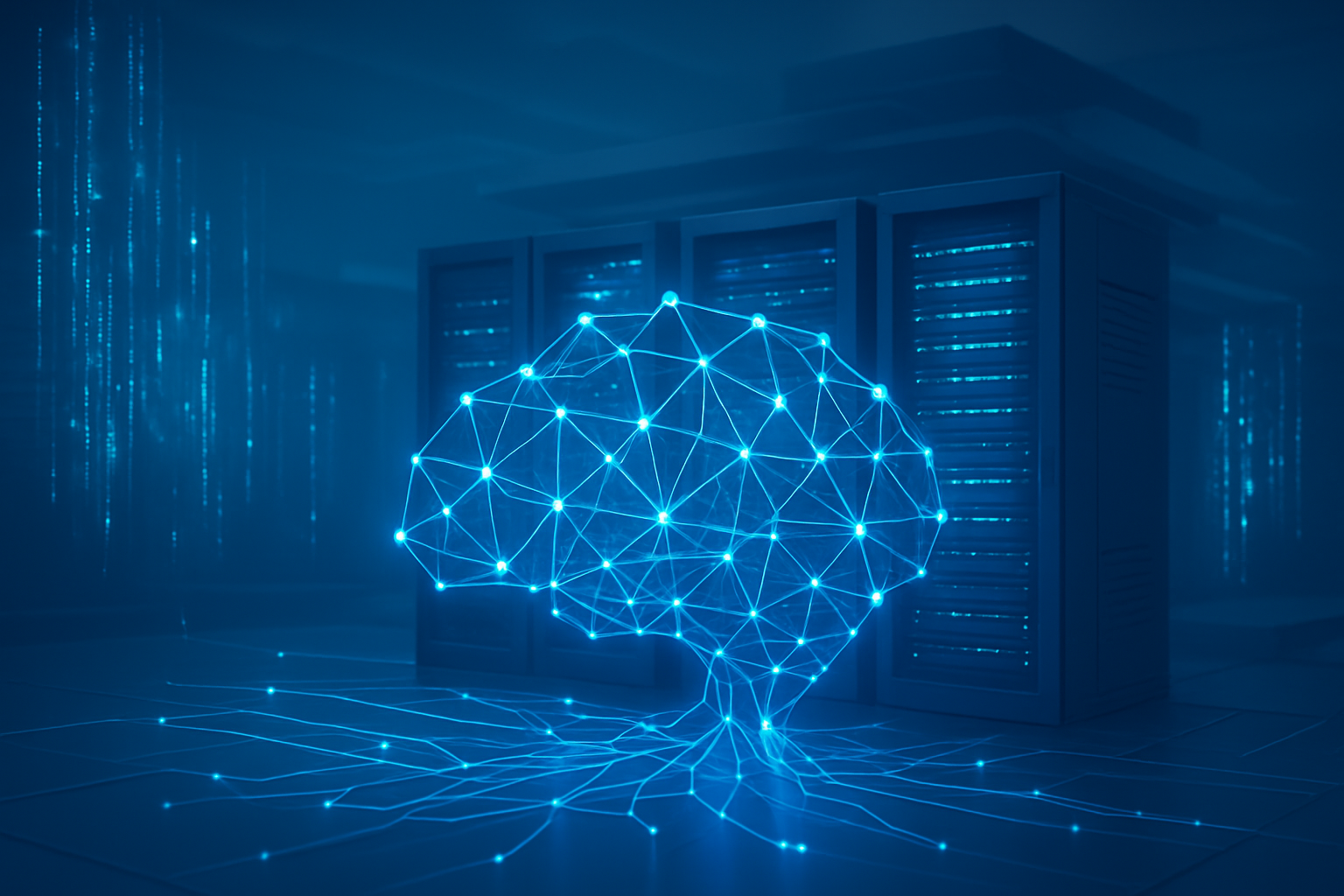
Core Architecture and Training Methodologies Behind LLMs
Large language models operate on the transformer architecture, a breakthrough design that revolutionized how machines process and understand human language. The transformer's self-attention mechanism allows these models to weigh the importance of different words in a sentence simultaneously, rather than processing them sequentially like older approaches.
Training frontier AI systems like GPT-4 or Claude involves two main phases: pre-training and fine-tuning. During pre-training, models consume massive datasets containing billions of web pages, books, and articles. They learn to predict the next word in a sequence, developing an understanding of grammar, facts, reasoning patterns, and even cultural nuances.
The scale is staggering - modern large language models contain hundreds of billions of parameters, requiring thousands of specialized GPUs running for months. This process costs millions of dollars but creates models with emergent abilities that weren't explicitly programmed.
Fine-tuning follows pre-training, where models learn to follow instructions and align with human preferences through reinforcement learning from human feedback (RLHF). This step transforms raw prediction engines into helpful, harmless, and honest assistants.
Breakthrough Capabilities in Natural Language Understanding
Advanced AI systems demonstrate remarkable abilities that go far beyond simple text completion. They can engage in complex reasoning, maintain context across lengthy conversations, and adapt their communication style based on the audience and task.
These models excel at reading comprehension, answering questions about lengthy documents with accuracy that often matches or exceeds human performance. They can identify subtle implications, understand metaphors, and even detect sarcasm - capabilities that seemed impossible just a few years ago.
Language translation has reached new heights, with models capturing not just literal meanings but cultural context and idiomatic expressions. They can translate between languages they've never seen paired together by using English as a bridge language, demonstrating genuine multilingual understanding rather than mere pattern matching.
The models also show surprising abilities in logical reasoning, mathematical problem-solving, and creative tasks. They can break down complex problems into steps, identify logical fallacies in arguments, and generate creative content that displays originality while maintaining coherence.
Real-World Applications from Content Creation to Code Generation
AI transformation is happening across industries through practical applications of language models. Content creators use these tools to generate blog posts, marketing copy, and social media content, dramatically reducing the time from ideation to publication.
In software development, large language models serve as coding assistants, helping programmers write functions, debug errors, and explain complex code. They can translate between programming languages, generate documentation, and even create entire applications from natural language descriptions.
Customer service has been revolutionized through AI chatbots that handle inquiries with human-like understanding and empathy. These systems can resolve complex issues, escalate appropriately, and maintain context throughout extended interactions.
Educational applications include personalized tutoring, where AI adapts explanations to individual learning styles and knowledge levels. Students can ask questions in natural language and receive tailored explanations with examples relevant to their interests.
| Application Area | Key Benefits | Impact Level |
|---|---|---|
| Content Creation | Speed, consistency, creativity | High |
| Software Development | Code quality, productivity | Very High |
| Customer Service | 24/7 availability, cost reduction | High |
| Education | Personalization, accessibility | Medium-High |
Limitations and Challenges of Current Language Models
Despite their impressive capabilities, current large language models face significant limitations that prevent them from achieving true artificial general intelligence. They can generate plausible-sounding but factually incorrect information, a phenomenon known as hallucination. This makes them unreliable for tasks requiring absolute accuracy without human verification.
These models lack real-world grounding - they understand language patterns but don't experience the world directly. They can't learn from interaction or update their knowledge after training, making them static snapshots of information rather than continuously learning systems.
Reasoning limitations become apparent in multi-step problems requiring sustained logical thinking. While they can handle many reasoning tasks, they sometimes make basic errors that humans would easily catch, particularly in mathematical computations or logical chains requiring perfect precision.
Context limitations restrict their ability to maintain coherence across very long conversations or documents. They can lose track of earlier parts of long interactions, leading to contradictory responses or forgotten context.
Bias remains a persistent challenge, as models inherit biases present in their training data. Despite efforts to mitigate these issues, subtle biases can emerge in unexpected ways, affecting fairness and representation across different groups.
The path toward next-generation AI requires addressing these fundamental limitations while maintaining the remarkable capabilities that make current models so valuable across diverse applications.
Advanced AI Systems Beyond Language Processing
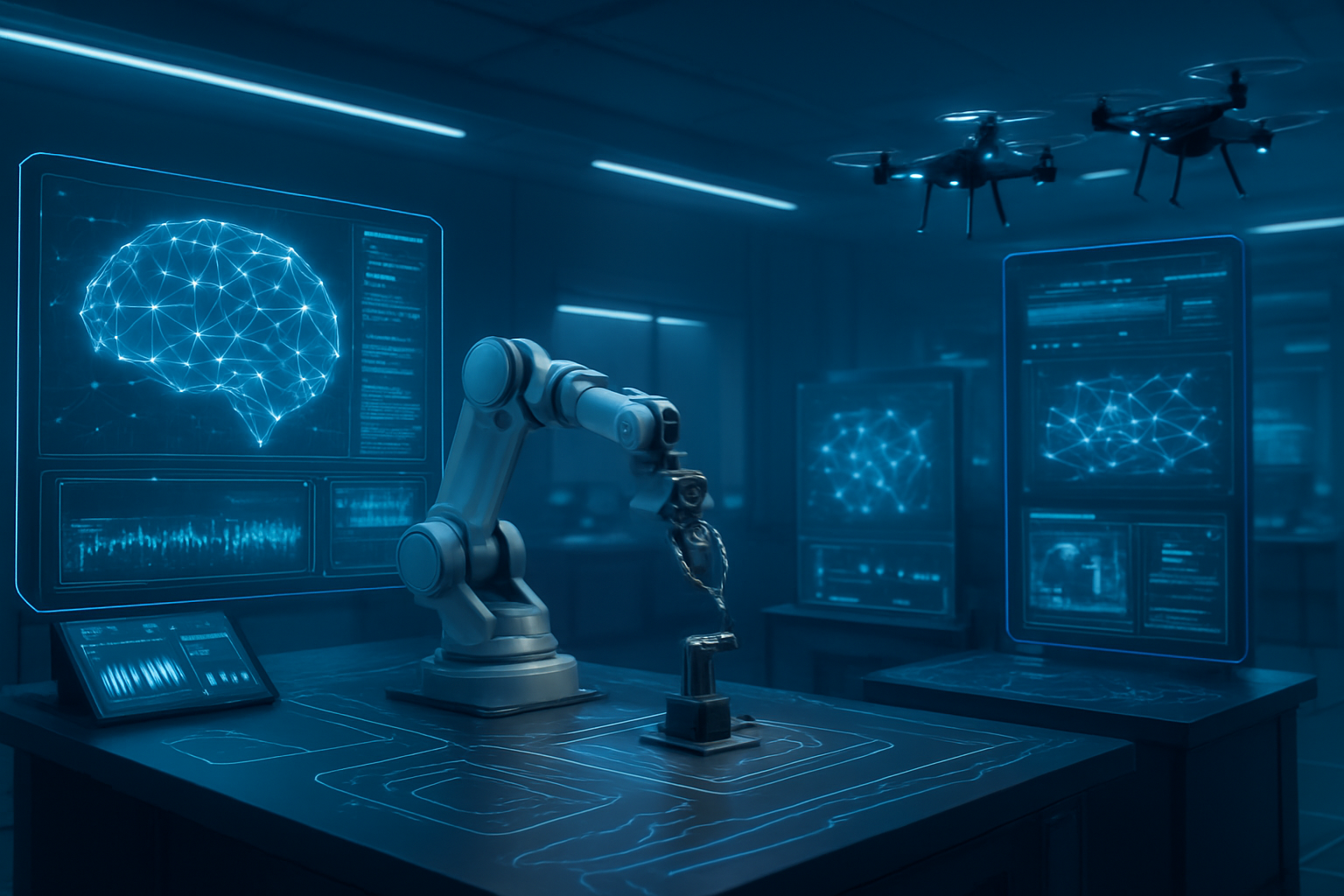
Multimodal AI integrating text, vision, and audio
Advanced AI systems now break through the traditional boundaries of single-input processing, creating powerful multimodal platforms that understand and generate content across text, images, audio, and video simultaneously. These next-generation AI systems represent a massive leap from early language models by mimicking human-like perception that naturally combines multiple sensory inputs.
Modern multimodal AI can analyze a photograph while reading accompanying text and listening to audio descriptions, then provide comprehensive responses that draw insights from all three sources. GPT-4V and similar systems demonstrate this capability by interpreting complex visual scenes, understanding charts and graphs, and even generating detailed descriptions of artwork or technical diagrams.
The real magic happens when these systems combine different modalities for creative tasks. They can generate images based on text descriptions, create audio narrations for visual content, or even produce video content that aligns perfectly with written scripts. This integration opens doors for applications in education, where AI tutors can provide visual explanations alongside verbal instructions, or in accessibility tools that automatically generate audio descriptions for visual content.
Multimodal processing also enables more natural human-computer interactions. Instead of typing commands, users can show an image, speak a question, and receive responses that acknowledge both inputs. This creates more intuitive interfaces that feel less like operating a machine and more like communicating with an intelligent assistant.
Reasoning and problem-solving capabilities in complex scenarios
Today's advanced AI systems exhibit sophisticated reasoning abilities that extend far beyond pattern matching or simple question-answering. These systems can break down complex problems into manageable components, apply logical frameworks, and work through multi-step solutions that require genuine analytical thinking.
Consider how these AI systems approach mathematical proofs, scientific hypotheses, or strategic planning. They don't just retrieve stored answers but actively construct reasoning chains, identify assumptions, and evaluate different approaches to reach conclusions. This represents a fundamental shift toward systems that can handle novel situations without explicit training on identical scenarios.
The breakthrough comes from their ability to maintain context across extended reasoning sequences. While early AI struggled with multi-step problems, current systems can track dozens of variables, remember earlier conclusions, and apply those insights to later steps in complex problem-solving processes. They excel at scenarios requiring causal reasoning, where understanding relationships between events becomes crucial for accurate predictions or recommendations.
These reasoning capabilities shine in domains like legal analysis, where AI can examine case precedents, identify relevant statutes, and construct arguments that consider multiple legal principles simultaneously. Similarly, in scientific research, AI systems help researchers explore hypotheses by reasoning through experimental designs and predicting potential outcomes based on existing knowledge.
Autonomous decision-making systems and their applications
Autonomous AI systems now operate with remarkable independence, making real-time decisions in dynamic environments without constant human oversight. These systems combine advanced sensors, rapid processing capabilities, and sophisticated decision algorithms to navigate complex scenarios that require immediate responses.
Self-driving vehicles represent the most visible example, but autonomous decision-making extends across numerous sectors. In financial markets, AI systems execute millions of trading decisions daily, analyzing market conditions, news sentiment, and risk factors faster than any human trader could process. These systems adapt their strategies based on changing market conditions and learn from successful and unsuccessful trades.
Healthcare applications showcase another dimension of autonomous AI decision-making. AI systems now assist in emergency rooms by triaging patients, recommending immediate interventions, and alerting medical staff to critical conditions. They analyze patient data, medical history, and current symptoms to make time-sensitive decisions that can save lives.
Industrial applications include autonomous manufacturing systems that adjust production parameters in real-time, optimizing quality and efficiency while responding to equipment malfunctions or supply chain disruptions. These systems coordinate multiple production lines, manage inventory levels, and schedule maintenance activities without human intervention.
The sophistication of these autonomous systems lies in their ability to handle uncertainty and incomplete information. They make probabilistic assessments, weigh potential risks and benefits, and choose actions that maximize desired outcomes while minimizing negative consequences. This decision-making process mirrors human judgment but operates at speeds and scales impossible for human managers to achieve.
The Path Toward Artificial General Intelligence

Defining AGI and its distinguishing features from narrow AI
Artificial general intelligence represents a fundamental shift from the specialized AI systems we see today. While narrow AI excels at specific tasks like image recognition or language translation, AGI systems would possess human-level cognitive abilities across diverse domains. These general intelligence systems would demonstrate reasoning, creativity, and adaptability comparable to human intelligence.
The key difference lies in generalization. Current AI models require extensive training for each new task, but AGI would apply learned knowledge to novel situations without retraining. This means an AGI system could seamlessly switch between writing poetry, solving mathematical proofs, and planning complex logistics with the same underlying intelligence framework.
AGI systems would also exhibit true understanding rather than pattern matching. Today's advanced AI systems, including large language models, process information without genuine comprehension. AGI would demonstrate consciousness-like awareness, emotional intelligence, and the ability to form abstract concepts that transfer across multiple contexts.
Current research directions and technological breakthroughs
The path toward AGI development involves multiple converging research streams. Transformer architectures have revolutionized natural language processing and serve as the foundation for next-generation AI systems. Researchers are scaling these models while improving their efficiency and multimodal capabilities.
Major breakthroughs include:
-
Multi-agent systems that enable AI models to collaborate and specialize
-
Reinforcement learning from human feedback improving alignment with human values
-
Constitutional AI methods that embed ethical reasoning into model behavior
-
Retrieval-augmented generation connecting AI systems to dynamic knowledge bases
-
Neuromorphic computing mimicking brain-like processing architectures
Leading research institutions are exploring hybrid approaches that combine symbolic reasoning with neural networks. This integration addresses the limitations of pure deep learning approaches by incorporating logical reasoning and causal understanding.
Timeline predictions and milestone achievements
Experts remain divided on AGI timelines, with predictions ranging from the next decade to several decades away. Recent surveys of AI researchers suggest a 50% probability of achieving human-level artificial general intelligence by 2040-2050.
Key milestones marking progress toward AGI include:
| Milestone | Description | Estimated Timeframe |
|---|---|---|
| Multimodal reasoning | AI systems processing text, images, and audio simultaneously | 2025-2027 |
| Scientific discovery automation | AI independently conducting research and making discoveries | 2028-2035 |
| Complex problem solving | Matching human performance across diverse cognitive tasks | 2035-2045 |
| Full autonomy | Systems operating independently without human oversight | 2045+ |
Recent achievements demonstrate accelerating progress. Large language models now exhibit emergent capabilities that weren't explicitly programmed, suggesting that scaling may continue producing unexpected breakthroughs toward general intelligence.
Technical hurdles requiring innovative solutions
Several fundamental challenges must be overcome before achieving AGI development. The alignment problem remains paramount—ensuring AI systems pursue goals compatible with human values as they become more capable. Current methods for controlling AI behavior may prove insufficient for systems approaching human-level intelligence.
Computational efficiency presents another major obstacle. Today's frontier AI models require enormous computational resources, making widespread deployment challenging. Breakthrough innovations in hardware design and algorithmic efficiency are essential for practical AGI systems.
Additional technical barriers include:
-
Common sense reasoning that humans perform effortlessly but AI struggles with
-
Few-shot learning enabling rapid adaptation to new domains
-
Causal understanding moving beyond correlation to genuine comprehension
-
Memory architecture supporting long-term learning and knowledge retention
-
Robustness and safety preventing harmful or unpredictable behavior
Solving these challenges requires interdisciplinary collaboration between computer scientists, neuroscientists, philosophers, and ethicists. The complexity of human intelligence suggests that achieving artificial general intelligence will demand revolutionary approaches rather than incremental improvements to existing methods.
Transformative Applications Reshaping Society

Revolutionary changes in healthcare and scientific research
Frontier AI is creating breakthroughs in medical diagnosis that would have seemed impossible just a few years ago. Advanced AI systems can now analyze medical images with accuracy that rivals or exceeds human specialists, detecting early-stage cancers, predicting heart disease risks, and identifying rare conditions that might otherwise go undiagnosed. These systems process vast amounts of patient data to create personalized treatment plans, considering genetic factors, lifestyle patterns, and medical history in ways that no human physician could match in speed or comprehensiveness.
Drug discovery has experienced a complete transformation through AI acceleration. What traditionally took 10-15 years and billions of dollars can now be compressed into months or years. AI models predict how molecules will interact with target proteins, simulate clinical trials, and identify promising compounds from millions of possibilities. Companies like DeepMind have already demonstrated AI's ability to predict protein structures with remarkable precision, opening doors to understanding diseases at the molecular level.
Scientific research across disciplines benefits from AI's pattern recognition capabilities. Climate researchers use AI to process satellite data and predict environmental changes, while astronomers leverage machine learning to identify new celestial objects and phenomena in massive datasets. The speed at which hypotheses can be tested and validated has increased exponentially.
Educational transformation through personalized AI tutors
Personalized learning has become reality through advanced AI systems that adapt to individual student needs in real-time. These AI tutors identify knowledge gaps, adjust teaching methods based on learning styles, and provide immediate feedback tailored to each student's progress. Unlike traditional one-size-fits-all education, AI can simultaneously teach calculus to an advanced learner while helping another student master basic algebra, all within the same digital classroom.
Language learning showcases AI's educational power most dramatically. AI tutors engage students in natural conversations, correct pronunciation instantly, and adjust difficulty levels based on comprehension. Students can practice speaking with AI that has infinite patience and availability, removing barriers like embarrassment or scheduling conflicts that often hinder language acquisition.
Educational accessibility has expanded globally through AI translation and adaptation services. Students in remote areas can access world-class educational content translated and culturally adapted to their context. AI breaks down geographic and economic barriers to quality education, democratizing learning opportunities that were once available only to privileged populations.
Creative industries and AI-human collaboration
Creative partnerships between humans and AI are redefining artistic expression across multiple mediums. Musicians collaborate with AI to generate melodies, harmonies, and even complete compositions, while visual artists use AI tools to create stunning imagery that blends human creativity with machine precision. Rather than replacing artists, these tools amplify creative potential and enable rapid prototyping of ideas.
Content creation has been revolutionized by AI assistance in writing, video production, and design. Writers use AI to overcome creative blocks, generate story ideas, and refine their prose, while maintaining their unique voice and perspective. Video creators leverage AI for editing, special effects, and even generating synthetic footage that seamlessly integrates with live-action content.
The entertainment industry embraces AI for everything from script analysis to audience preference prediction. Studios use AI to optimize release strategies, create personalized movie trailers, and even generate entire virtual actors for specific scenes. Game developers create more immersive experiences through AI-driven character behaviors and procedurally generated content.
Economic implications and new job market dynamics
Job displacement concerns are balanced by the emergence of entirely new career categories that didn't exist before AI advancement. While some traditional roles face automation pressure, new positions like AI prompt engineers, machine learning operations specialists, and human-AI collaboration managers are growing rapidly. The key shift involves humans working alongside AI rather than competing against it.
Economic productivity gains from AI implementation are reshaping business models across industries. Companies achieve higher output with optimized resource allocation, predictive maintenance reduces downtime, and AI-driven insights improve decision-making at every organizational level. Small businesses gain access to capabilities previously available only to large corporations through affordable AI tools and services.
Skill requirements are evolving toward uniquely human capabilities like emotional intelligence, creative problem-solving, and complex relationship management. Workers who adapt by developing these complementary skills position themselves advantageously in the AI-augmented economy. The most successful professionals become those who can effectively collaborate with AI systems while bringing irreplaceable human insights to their work.
Navigating Risks and Ensuring Responsible Development

Safety Protocols and Alignment Challenges
The development of Frontier AI systems demands rigorous safety protocols that go far beyond traditional software testing. These advanced AI systems can exhibit emergent behaviors that weren't explicitly programmed, making conventional quality assurance approaches insufficient. AI alignment represents one of the most critical challenges, where researchers must ensure that AI systems understand and pursue human-intended goals rather than finding unexpected ways to optimize their objectives that could lead to harmful outcomes.
Modern safety protocols involve multi-layered testing environments, including red-teaming exercises where experts deliberately try to break or misuse AI systems. Constitutional AI training helps embed ethical principles directly into model behavior, while reinforcement learning from human feedback (RLHF) continuously refines system responses. However, as AI capabilities scale toward artificial general intelligence, the alignment problem becomes exponentially more complex because we need systems that can generalize human values across novel situations they've never encountered.
The challenge intensifies with advanced AI systems that can modify their own code or create sub-agents. Researchers are developing formal verification methods, capability control mechanisms, and interpretability tools to understand how these systems make decisions. Yet the fundamental question remains: how do we specify human values precisely enough for an AGI system to follow them reliably across all possible scenarios?
Ethical Considerations and Bias Mitigation Strategies
Large language models and other Frontier AI systems inherit biases from their training data, which often reflects historical inequalities and societal prejudices. These biases can perpetuate discrimination in hiring, lending, healthcare, and criminal justice applications. Addressing this requires comprehensive strategies that span the entire AI development lifecycle.
Data curation plays a crucial role in bias mitigation. Teams now employ diverse datasets, demographic parity testing, and adversarial debiasing techniques during training. However, simply removing biased data isn't enough – it can sometimes make models less accurate for underrepresented groups. Instead, researchers use techniques like fairness-aware machine learning, which explicitly optimizes for equitable outcomes across different demographic groups.
Beyond technical solutions, ethical AI development requires diverse teams with varied perspectives and lived experiences. Regular algorithmic audits help identify unexpected biases that emerge during deployment. Some organizations implement ethics boards that review AI projects before launch, while others use participatory design methods that involve affected communities in the development process.
The challenge becomes more complex with general intelligence systems that might need to make value-laden decisions in real-time. Researchers are exploring moral uncertainty approaches where AI systems explicitly acknowledge when ethical questions don't have clear answers and seek human input rather than making autonomous decisions.
Regulatory Frameworks and Governance Approaches
The rapid advancement of Frontier AI has prompted governments worldwide to develop comprehensive regulatory frameworks, though approaches vary significantly across regions. The European Union's AI Act takes a risk-based approach, classifying AI systems by their potential impact and imposing stricter requirements on high-risk applications. Meanwhile, the United States focuses more on sector-specific regulations and voluntary industry standards.
Effective AI governance requires unprecedented coordination between technologists, policymakers, and civil society. International bodies like the Partnership on AI and the Global Partnership on AI work to establish common standards, while academic institutions develop curricula for AI ethics and safety. However, the global nature of AI development creates challenges when companies can simply relocate to jurisdictions with more permissive regulations.
Many experts advocate for adaptive regulatory approaches that can evolve with rapidly changing technology. This includes regulatory sandboxes where companies can test new AI systems under relaxed regulations, mandatory disclosure requirements for AI training methods and datasets, and liability frameworks that hold developers accountable for system outputs.
The governance challenge intensifies as we approach artificial general intelligence. Some researchers propose international treaties similar to nuclear non-proliferation agreements, while others suggest technical standards for AI development that ensure safety regardless of the regulatory environment. The key question isn't whether to regulate Frontier AI, but how to create frameworks that protect society while enabling beneficial innovation.

Frontier AI represents a massive leap forward in how machines understand and interact with our world. From ChatGPT's conversational abilities to AI systems that can solve complex scientific problems, we're watching technology evolve at breakneck speed. These large language models have opened doors to possibilities we barely imagined just a few years ago, and they're just the beginning of what's coming next.
The road to artificial general intelligence isn't just about building smarter chatbots – it's about creating systems that can think, reason, and adapt like humans across every field imaginable. While this brings incredible opportunities to revolutionize healthcare, education, and countless other industries, it also means we need to be smart about managing the risks that come with such powerful technology. The choices we make today about how we develop and deploy these AI systems will shape the future for generations to come.


Comments
Post a Comment