The AI Energy Crisis: Can Sustainable Computing Keep Up with AI Growth?
The AI Energy Crisis: Can Sustainable Computing Keep Up with AI Growth?
The AI Energy Crisis: Can Sustainable Computing Keep Up with AI Growth?
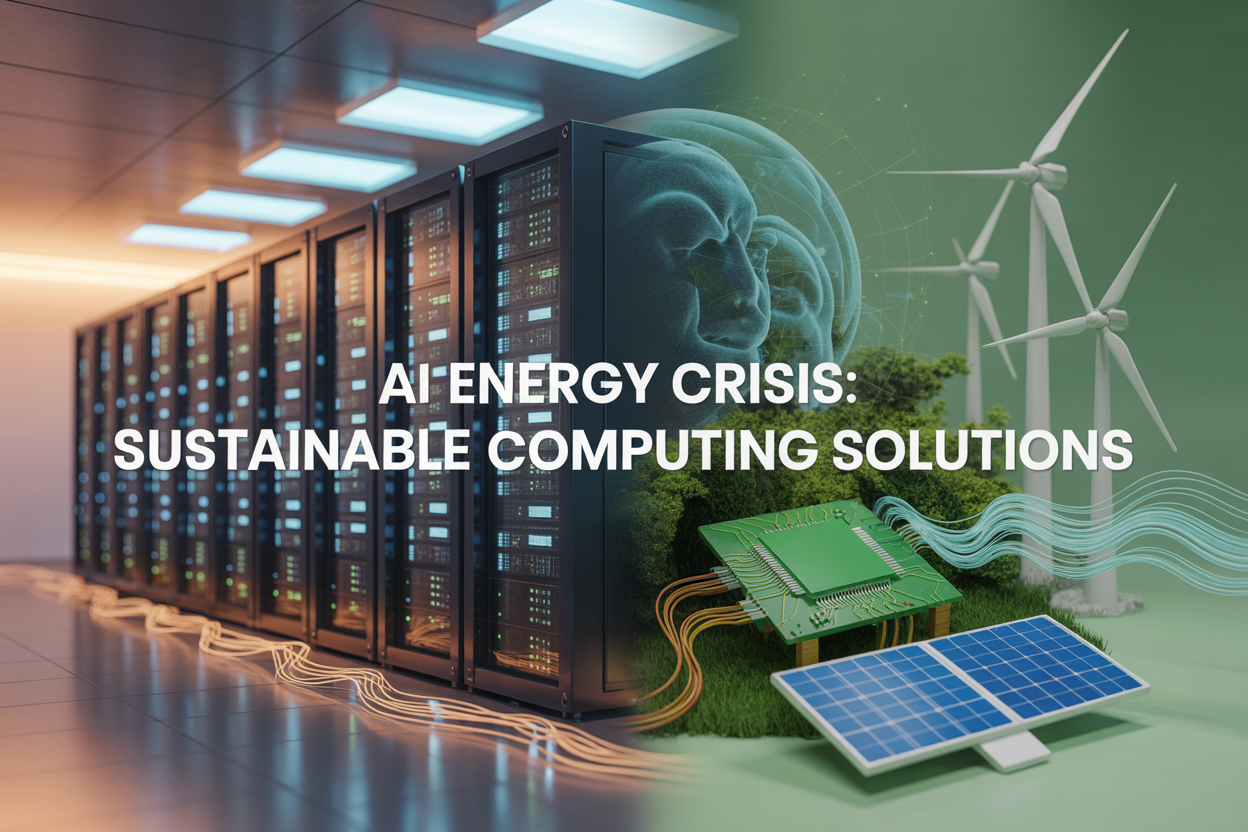
Artificial intelligence is transforming our world at breakneck speed, but there's a hidden cost that's growing just as fast: AI energy consumption. Every time you use ChatGPT, stream a personalized recommendation, or interact with a smart assistant, massive data centers are burning through electricity at an alarming rate. This isn't just a tech problem—it's becoming an environmental crisis that demands immediate attention.
This guide is for tech professionals, business leaders, sustainability advocates, and anyone curious about the environmental impact of AI computing. You'll discover why AI's carbon footprint is skyrocketing and what that means for our planet's future.
We'll explore how current sustainable computing solutions are trying to keep pace with AI's explosive growth. You'll learn about breakthrough green AI technology that's reshaping energy efficiency, from specialized chips to smarter algorithms. We'll also examine how industry giants are driving sustainable AI development and whether we can balance technological progress with environmental responsibility.
The race is on to solve the AI energy crisis before it's too late—and the solutions might surprise you.
Understanding AI's Explosive Energy Consumption

Massive Power Requirements of Modern AI Models
Today's cutting-edge AI models are absolute power hogs. Take GPT-4 or similar large language models - they consume roughly the same amount of electricity as a small town just to run for a few hours. The numbers are staggering: training a single large AI model can require between 1,000 to 10,000 megawatt-hours of electricity, equivalent to powering hundreds of homes for an entire year.
These massive AI energy consumption levels stem from the sheer computational complexity involved. Modern AI systems process billions of parameters simultaneously, requiring thousands of high-performance GPUs working around the clock. Each GPU can draw 300-500 watts of power, and when you multiply that by the thousands needed for large-scale AI operations, the numbers become astronomical.
The infrastructure supporting these models adds another layer of energy demand. Data centers housing AI workloads need extensive cooling systems, backup power supplies, and networking equipment - all contributing to the overall power footprint. Major tech companies report that their AI-focused data centers consume 10-50 times more energy per square foot than traditional computing facilities.
Training vs Inference Energy Costs
The AI energy crisis has two distinct phases, each with dramatically different power profiles. Training represents the initial phase where models learn from massive datasets, while inference covers the ongoing operational phase where trained models respond to user queries.
Training costs dominate the energy equation, accounting for roughly 80-90% of an AI model's total lifetime energy consumption. A single training run for a large language model can consume 100-1,000 megawatt-hours, depending on the model size and training duration. These sessions often run continuously for weeks or months, with thousands of processors working simultaneously to process training data and adjust model parameters.
| Phase | Energy Intensity | Duration | Primary Hardware |
|---|---|---|---|
| Training | 100-1,000 MWh per model | Weeks to months | Thousands of GPUs |
| Inference | 0.01-1 kWh per query | Milliseconds | Optimized processors |
Inference energy costs appear smaller per individual query but add up quickly at scale. Each ChatGPT query consumes roughly 0.3-0.5 kWh of electricity - about 10 times more than a Google search. With millions of daily users, these inference costs create sustained energy demand that continues growing as AI adoption spreads across industries.
The energy profile differs significantly between these phases. Training demands peak power for extended periods, while inference requires consistent baseline power with occasional spikes during high-traffic periods. This creates challenges for sustainable computing strategies, as both phases require different approaches to energy optimization.
Exponential Growth Projections for AI Energy Demand
AI energy consumption is following a trajectory that makes climate experts nervous. Current projections suggest global AI energy demand could increase by 300-500% over the next five years, potentially consuming 3-8% of worldwide electricity production by 2030.
The growth drivers are multiplying rapidly. More companies are deploying AI systems, existing models are getting larger and more complex, and new applications are emerging across every industry. Each new breakthrough in AI capability typically requires exponentially more computational power than the previous generation.
Industry analysts predict that AI-related electricity consumption could reach 100-200 terawatt-hours annually by 2027, comparable to the entire energy consumption of countries like Argentina or Egypt. This explosive growth in AI energy consumption is happening faster than renewable energy infrastructure can scale to meet demand.
The compounding effect is particularly concerning. As AI models become more capable, they attract more users, generating more inference requests and creating demand for even more powerful models. This creates a feedback loop where each advancement in AI technology drives exponentially higher energy requirements.
Data center operators are already struggling to keep pace with AI energy demands. Some facilities are hitting power grid limits, forcing companies to delay AI projects or seek locations with more robust electrical infrastructure. The sustainable AI development movement is gaining urgency as these energy constraints become real barriers to AI progress.
The Environmental Impact of AI Computing
Carbon Footprint of Major AI Data Centers
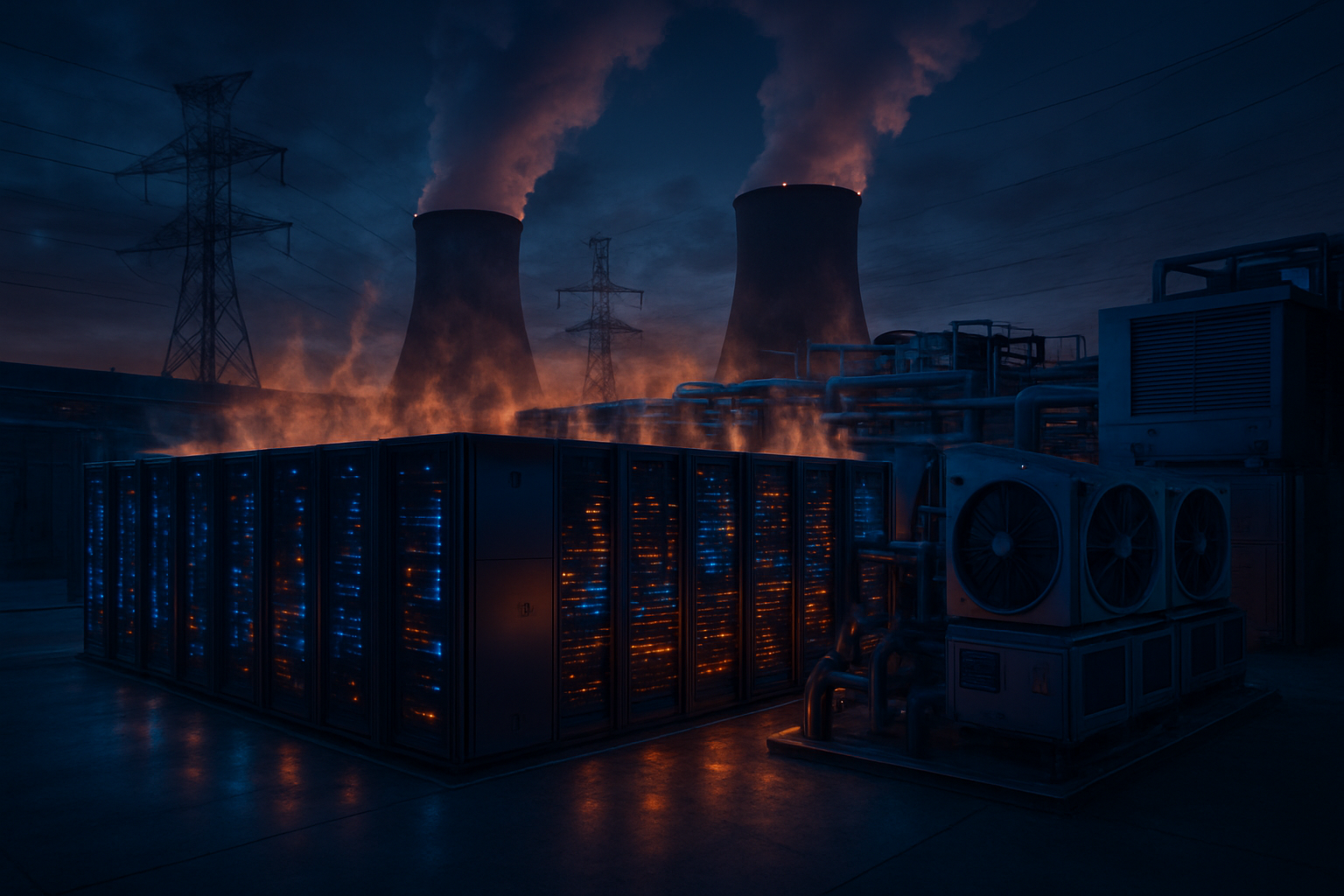
Training a single large language model can generate the same CO2 emissions as five cars over their entire lifetimes. Google's AI operations alone produce approximately 10.9 million tons of CO2 annually, while Microsoft's AI-driven services contribute roughly 16 million tons. These staggering numbers reflect the massive computational requirements of modern AI systems.
Major tech companies operate thousands of data centers worldwide, each consuming megawatts of electricity continuously. Amazon Web Services runs over 100 data centers globally, with their largest facilities consuming enough power to supply entire cities. Meta's AI training infrastructure requires specialized facilities that can draw 20-50 megawatts per building, equivalent to powering 15,000-37,500 homes simultaneously.
The AI carbon footprint extends beyond direct energy consumption. Manufacturing specialized AI chips like NVIDIA's H100 GPUs generates significant emissions before they even power on. Each chip requires rare earth elements and energy-intensive fabrication processes that contribute an additional 300-500 kg of CO2 per unit.
Water Usage for Cooling High-Performance Computing Systems
AI data centers consume enormous quantities of water for cooling systems, with some facilities using millions of gallons daily. Microsoft's data centers alone consumed 6.4 billion gallons of water in 2022, largely for cooling AI workloads. A single ChatGPT conversation requires approximately 500 milliliters of water for the cooling infrastructure supporting the computation.
High-performance GPU clusters generate extreme heat loads requiring sophisticated cooling systems. Modern AI servers can produce 40-80 kilowatts per rack, compared to 6-10 kilowatts for traditional servers. This heat density demands either direct liquid cooling or massive air conditioning systems that rely heavily on water evaporation.
Water-cooled systems in AI facilities use several cooling methods:
-
Direct liquid cooling: Circulates coolant directly through server components
-
Evaporative cooling: Uses water evaporation to remove heat from air conditioning systems
-
Cooling towers: Employ water circulation and evaporation for heat rejection
-
Chilled water systems: Use water-based heat exchangers and chillers
Desert locations popular for data centers due to cheap land and renewable energy access face particular challenges. These regions often experience water scarcity, creating tension between AI infrastructure needs and local water resources.
Electronic Waste from Rapidly Obsolete Hardware
AI hardware becomes obsolete at an unprecedented pace, creating massive electronic waste streams. GPU generations typically last 2-3 years before newer architectures offer significant performance improvements, forcing data centers to retire functional equipment. NVIDIA's transition from V100 to A100 to H100 chips exemplifies this rapid obsolescence cycle.
The specialized nature of AI hardware complicates recycling efforts. GPUs contain valuable materials like gold, silver, and rare earth elements, but their complex architectures make material recovery expensive and technically challenging. High-bandwidth memory (HBM) and specialized tensor processing units require different recycling approaches than traditional electronics.
Current electronic waste from AI computing includes:
-
Retired GPU clusters: Thousands of graphics cards replaced during upgrades
-
Networking equipment: High-speed interconnects that can't keep pace with new standards
-
Storage systems: SSDs and NVMe drives with limited write cycles
-
Cooling infrastructure: Pumps, radiators, and cooling units replaced during efficiency upgrades
Major cloud providers generate thousands of tons of AI-related e-waste annually. Amazon, Google, and Microsoft each retire entire server generations every 3-5 years, with AI workloads accelerating replacement cycles. Many components still function adequately but lack the performance density required for competitive AI services.
Global Energy Grid Strain from AI Infrastructure
AI infrastructure places unprecedented stress on electrical grids worldwide. Data centers now account for 1-2% of global electricity consumption, with AI workloads representing the fastest-growing segment. Ireland's data centers already consume 18% of the country's total electricity, largely due to major tech companies' AI operations.
Power grid operators struggle to meet the instantaneous demand spikes from AI training runs. Large language model training can require 10-20 megawatts of sustained power for weeks or months, equivalent to a small city's consumption. These workloads run 24/7, providing little opportunity for load balancing or peak shaving.
Regional impacts vary significantly based on AI infrastructure concentration:
| Region | AI Power Demand | Grid Impact | Primary Challenges |
|---|---|---|---|
| Northern Virginia | 2,500+ MW | 25% of regional load | Transmission bottlenecks |
| Ireland | 1,200+ MW | 18% of national grid | Renewable integration |
| Singapore | 800+ MW | 15% of island capacity | Limited expansion space |
| Netherlands | 1,000+ MW | 12% of data center load | Cooling efficiency requirements |
Utilities increasingly require AI companies to fund grid upgrades and transmission infrastructure. Virginia's Dominion Energy invested $2.8 billion in transmission upgrades primarily to support data center growth in northern Virginia's "Data Center Alley."
Peak demand management becomes critical as AI workloads grow. Unlike traditional computing that follows daily usage patterns, AI training runs maintain constant high power draw. This "always-on" characteristic prevents utilities from using traditional demand response strategies, forcing infrastructure upgrades rather than load management solutions.
Current Sustainable Computing Solutions
Energy-Efficient AI Chip Architectures
The semiconductor industry has responded to the AI energy crisis with innovative chip designs that dramatically reduce power consumption without sacrificing performance. Neuromorphic processors, inspired by the human brain's architecture, represent a game-changing approach to sustainable computing. These specialized chips mimic neural networks at the hardware level, consuming up to 1000 times less energy than traditional processors for specific AI tasks.
Google's Tensor Processing Units (TPUs) exemplify purpose-built AI hardware that optimizes energy efficiency. Unlike general-purpose CPUs, TPUs are designed specifically for machine learning workloads, achieving significantly better performance-per-watt ratios. Similarly, companies like Cerebras and Graphcore have developed wafer-scale processors that maximize computational density while minimizing energy waste through advanced power management techniques.
Edge AI chips are revolutionizing sustainable AI development by bringing processing power closer to data sources. These low-power processors enable AI inference directly on devices, reducing the need for energy-intensive data center communication. Apple's M-series chips and Qualcomm's AI Engine demonstrate how mobile processors can handle complex AI tasks while maintaining exceptional energy efficiency.
Memory-centric computing architectures address one of the biggest energy drains in traditional computing: data movement between processors and memory. Processing-in-memory (PIM) technologies and near-data computing solutions minimize energy consumption by performing calculations where data is stored, eliminating costly data transfers that can account for up to 70% of total system energy usage.
Renewable Energy Integration in Data Centers
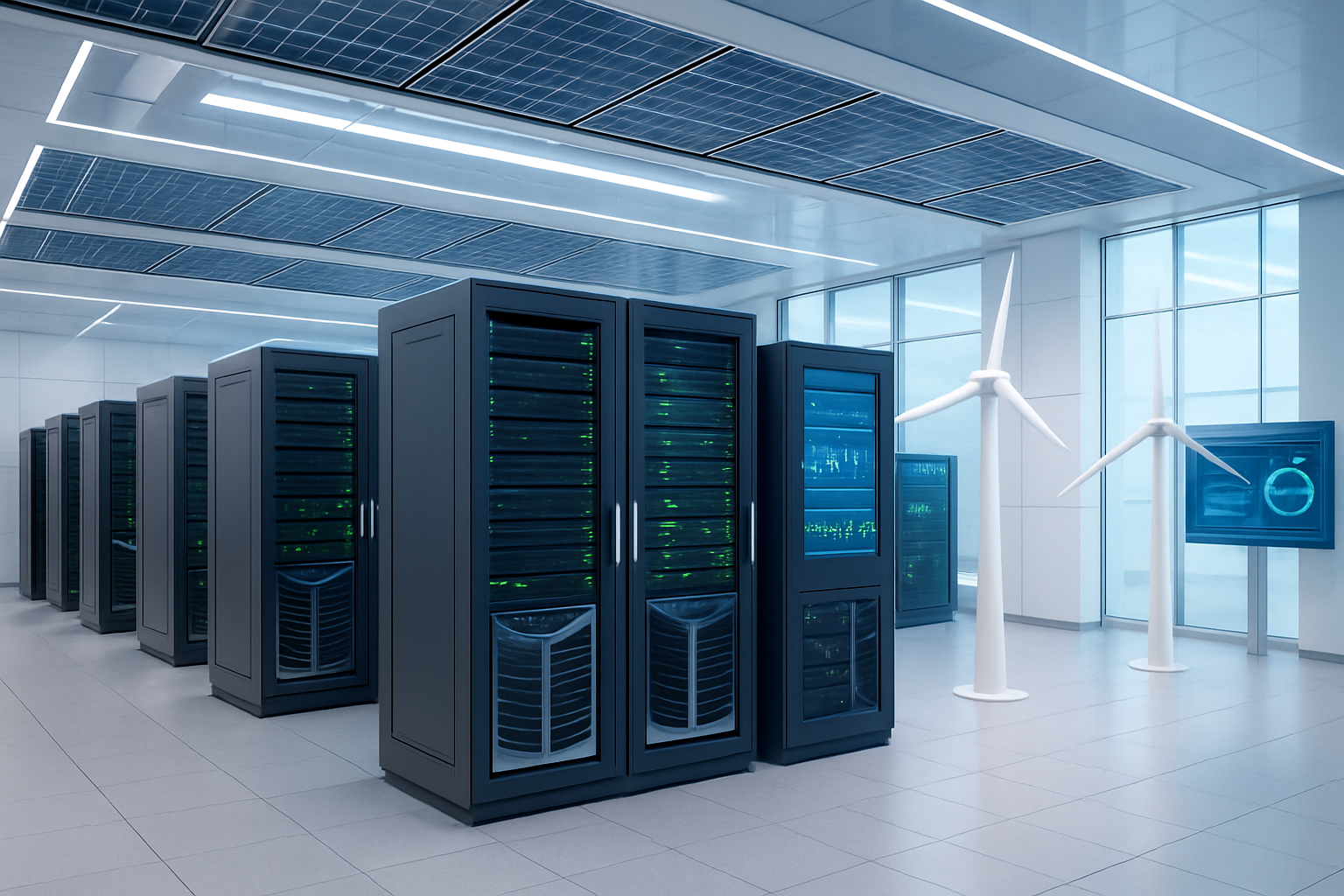
Major tech companies are transforming their data center operations through comprehensive renewable energy strategies. Google achieved carbon neutrality for its global operations and now runs its data centers on 100% renewable energy, setting a benchmark for sustainable computing infrastructure. Microsoft's commitment to be carbon negative by 2030 includes massive investments in solar and wind energy for their Azure data centers.
The integration process involves sophisticated energy management systems that balance renewable energy availability with computational demands. Smart grid technologies enable data centers to shift AI training workloads to times when renewable energy is abundant, optimizing both cost and environmental impact. Companies like Facebook (Meta) have pioneered this approach, timing their most energy-intensive AI model training sessions to coincide with peak solar and wind generation.
Battery storage systems and energy management software play crucial roles in maintaining consistent operations while maximizing green energy AI technology usage. Tesla's Megapack installations at data centers provide grid-scale energy storage, ensuring continuous operation even when renewable sources are intermittent. Advanced predictive algorithms help data center operators anticipate energy needs and optimize renewable energy utilization patterns.
Power purchase agreements (PPAs) have become essential tools for securing long-term renewable energy supplies. These contracts provide price stability for operators while guaranteeing revenue streams for renewable energy developers, creating a sustainable ecosystem that supports both AI growth and environmental goals.
Advanced Cooling Technologies Reducing Power Consumption
Data center cooling traditionally accounts for 30-40% of total energy consumption, making it a critical area for sustainable data centers optimization. Liquid cooling systems have emerged as superior alternatives to air cooling, offering dramatically improved energy efficiency for high-performance AI hardware. Direct-to-chip cooling solutions can reduce cooling energy consumption by up to 50% compared to traditional air-based systems.
Immersion cooling represents the cutting edge of green computing solutions, submerging entire servers in dielectric fluids that conduct heat far more efficiently than air. Companies like Microsoft have demonstrated successful underwater data centers, leveraging natural ocean temperatures for cooling while achieving remarkable energy efficiency improvements. This approach eliminates the need for traditional cooling infrastructure entirely.
Free cooling technologies harness natural environmental conditions to reduce artificial cooling requirements. Data centers in cooler climates can use outside air for cooling during favorable weather conditions, while geothermal cooling systems tap into stable underground temperatures year-round. These approaches can reduce cooling energy consumption by 60-80% in appropriate locations.
AI-driven cooling optimization systems use machine learning algorithms to predict thermal loads and optimize cooling system performance in real-time. These intelligent systems continuously adjust cooling parameters based on computational workloads, external weather conditions, and equipment performance, ensuring optimal energy efficiency while maintaining safe operating temperatures for critical AI hardware.
Heat recovery and reuse systems capture waste heat from AI computations and redirect it for useful purposes, such as heating office buildings or supporting industrial processes. This circular approach to energy management transforms what was previously waste into valuable resources, significantly improving overall system efficiency and reducing the environmental impact of AI computing operations.
Breakthrough Technologies Reshaping AI Energy Efficiency
Neuromorphic Computing Mimicking Brain Efficiency
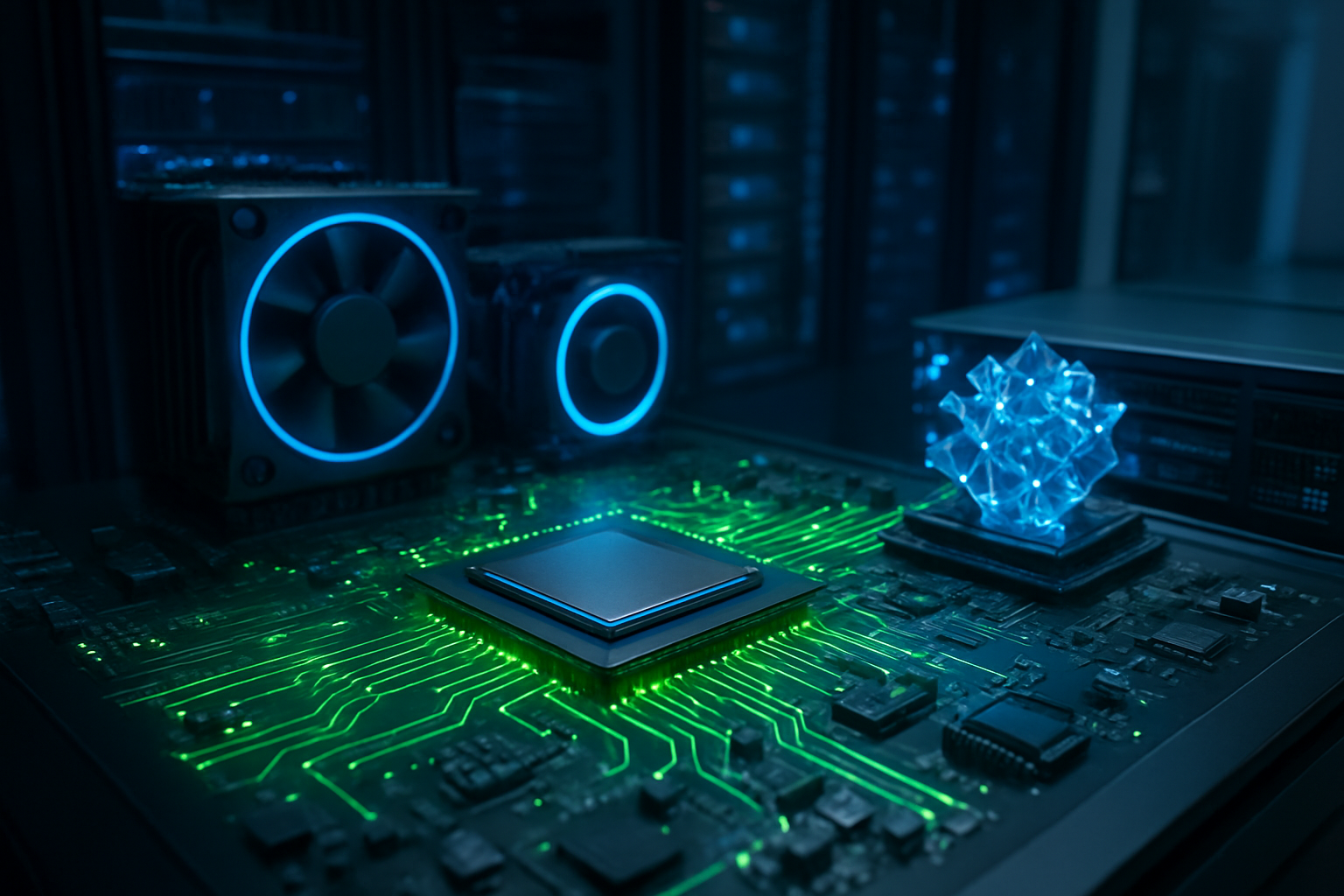
Neuromorphic computing represents a radical shift from traditional digital processing, designing chips that mirror how our brains actually work. Unlike conventional processors that handle information in rigid, sequential patterns, these specialized chips process data more like biological neurons - simultaneously and with incredible energy efficiency. Companies like Intel and IBM have developed neuromorphic processors that consume thousands of times less power than standard chips while performing AI tasks.
The secret lies in the architecture itself. Traditional computers separate memory and processing units, constantly shuttling data back and forth. Neuromorphic chips integrate these functions, just like brain synapses do. This design eliminates the energy-hungry data transfers that plague conventional AI systems. Intel's Loihi chip, for example, can recognize patterns and learn new behaviors while consuming just milliwatts of power - roughly equivalent to what your brain uses to process similar information.
Real-world applications are already emerging. Researchers have demonstrated neuromorphic systems that can recognize speech, process visual data, and even control robotic limbs with dramatically reduced AI energy consumption compared to traditional approaches. The technology shows particular promise for edge devices like smartphones and IoT sensors, where battery life matters more than raw computational speed.
Quantum Computing's Potential for Complex AI Tasks
Quantum computing could revolutionize sustainable AI development by solving certain types of problems exponentially faster than classical computers. While quantum machines won't replace traditional processors entirely, they excel at specific AI workloads like optimization problems, pattern recognition, and complex simulations that currently drain massive amounts of energy from conventional data centers.
The energy advantage comes from quantum mechanics itself. Where classical computers process information bit by bit, quantum systems use qubits that can exist in multiple states simultaneously. This parallel processing capability means quantum computers can explore thousands of solution paths at once, potentially solving complex AI problems in minutes rather than hours or days on traditional hardware.
Major tech companies are racing to develop quantum AI applications. Google's quantum computer achieved "quantum supremacy" for specific calculations, while IBM and other companies are building quantum systems specifically designed for machine learning tasks. Early quantum machine learning algorithms show promise for training neural networks more efficiently, optimizing supply chains, and solving complex scheduling problems that currently require enormous computational resources.
The catch? Current quantum computers still require extreme cooling and specialized environments. However, as the technology matures, quantum-classical hybrid systems could handle the most energy-intensive AI calculations while leaving routine tasks to conventional processors, creating a more sustainable overall computing ecosystem.
Edge Computing Reducing Centralized Data Center Loads
Edge computing fundamentally changes where AI processing happens, moving calculations from distant data centers to devices closer to where data gets generated. Instead of sending every piece of information to massive server farms, edge devices handle AI tasks locally - dramatically cutting energy consumption from data transmission and reducing the load on centralized infrastructure.
Smart cameras provide a perfect example. Traditional systems send raw video footage to cloud servers for processing, consuming enormous bandwidth and energy. Edge-enabled cameras run AI algorithms locally, analyzing footage in real-time and transmitting only relevant insights or alerts. This approach can reduce data transmission by up to 99% while delivering faster response times and improved privacy protection.
The technology extends far beyond individual devices. Edge data centers - smaller facilities located closer to users - are reshaping how companies deploy AI services. These distributed facilities require less cooling than massive centralized data centers and can use local renewable energy sources more effectively. Amazon, Microsoft, and Google are all investing heavily in edge infrastructure that brings AI processing closer to end users while reducing overall energy consumption.
Manufacturing, healthcare, and transportation industries are leading edge AI adoption. Autonomous vehicles process sensor data locally rather than relying on constant cloud connectivity. Smart factories run predictive maintenance algorithms on-site. Medical devices analyze patient data in real-time without sending sensitive information across networks. Each application reduces the overall energy footprint of AI systems while improving performance and reliability.
Optical Computing for Ultra-Low Power AI Processing
Optical computing harnesses light instead of electrons to process information, offering the potential for AI systems that consume dramatically less energy while operating at incredible speeds. Light-based processors can perform certain AI calculations - particularly matrix operations crucial for neural networks - using a fraction of the power required by traditional electronic chips.
The physics behind optical computing creates natural advantages for AI workloads. Light waves can carry multiple data streams simultaneously through different wavelengths, enabling massive parallel processing without the heat generation that plagues electronic circuits. Optical systems can also perform certain mathematical operations, like Fourier transforms essential for signal processing, almost instantaneously using the physical properties of light itself.
Companies like Lightmatter and Lightelligence are developing optical AI processors that promise 100x improvements in energy efficiency for specific machine learning tasks. These systems use photonic circuits to accelerate neural network training and inference while generating minimal heat - a major advantage for data centers struggling with cooling costs.
The technology faces significant challenges, including the need for optical-electronic conversion interfaces and limitations in performing certain types of calculations. However, hybrid approaches combining optical processing for AI-intensive tasks with electronic circuits for general computing show tremendous promise. As optical components become more sophisticated and cost-effective, this green AI technology could play a crucial role in making artificial intelligence more sustainable while maintaining rapid performance improvements.
Industry Leaders Driving Green AI Innovation

Tech Giants' Carbon-Neutral AI Commitments
Major technology companies are racing to transform their AI operations into sustainable powerhouses. Google has committed to running its entire cloud infrastructure on carbon-free energy by 2030, with their AI workloads being a central focus. Their data centers already achieve 50% better energy efficiency than typical enterprise facilities, and they're pushing these boundaries further with custom TPU chips designed specifically for energy-efficient artificial intelligence processing.
Microsoft takes a different approach with their ambitious goal to be carbon negative by 2030. They're investing heavily in renewable energy AI projects and have already achieved carbon neutrality across their operations. Amazon Web Services powers machine learning workloads with over 65% renewable energy and aims for 100% renewable energy by 2025. Their custom Graviton processors deliver up to 40% better price-performance for sustainable AI development compared to traditional x86 processors.
Apple's commitment extends beyond their own operations - they're working with suppliers to eliminate carbon emissions from their entire supply chain by 2030. Their neural engine chips in iPhones and MacBooks showcase how energy-efficient artificial intelligence can work at consumer scale without sacrificing performance.
Startup Solutions for Sustainable Machine Learning
Innovation in green AI technology is exploding among startups that aren't bound by legacy infrastructure. Cerebras Systems has developed wafer-scale processors that dramatically reduce AI energy consumption by eliminating the need for multiple chips to communicate across networks. Their CS-2 system can train large language models using significantly less power than traditional GPU clusters.
Mythic creates analog AI processors that consume 10x less power than digital alternatives while maintaining accuracy for edge computing applications. SambaNova Systems focuses on dataflow architecture that eliminates unnecessary data movement, cutting energy usage by up to 10x for certain AI workloads.
Startups like Hailo and Kneron are revolutionizing edge AI with processors designed specifically for sustainable computing. These chips enable complex machine learning tasks to run locally on devices, reducing the need for energy-intensive cloud processing. Graphcore's Intelligence Processing Units (IPUs) are specifically engineered for AI workloads, delivering better performance per watt than traditional processors.
Government Policies Incentivizing Energy-Efficient Computing
Governments worldwide are creating frameworks that push the AI industry toward sustainable practices. The European Union's Green Deal includes specific provisions for eco-friendly machine learning and sustainable data centers. Their proposed AI Act includes energy efficiency requirements that will shape how AI systems are developed and deployed across the continent.
The United States government has launched the National AI Research Resource initiative, which prioritizes sustainable AI development and provides researchers with access to energy-efficient computing resources. Tax incentives for companies investing in green computing solutions are becoming more common at both federal and state levels.
China's 14th Five-Year Plan explicitly targets AI carbon footprint reduction, with mandatory energy efficiency standards for data centers and AI computing facilities. Singapore offers grants for companies developing sustainable computing technologies, while South Korea's Green New Deal allocates billions specifically for green AI technology development.
| Region | Policy Focus | Investment Amount |
|---|---|---|
| EU | Green Deal & AI Act | €1 trillion |
| US | National AI Research Resource | $2.6 billion |
| China | Five-Year Plan | $1.4 trillion |
| Singapore | Green Finance Incentive | $2 billion |
These policies are creating a competitive advantage for companies that prioritize renewable energy AI solutions and sustainable computing practices.
Balancing AI Progress with Environmental Responsibility

Trade-offs Between Performance and Energy Efficiency
The relationship between AI performance and energy efficiency represents one of the most challenging balancing acts in modern technology. Companies developing artificial intelligence systems constantly face decisions about whether to prioritize computational power or reduce their AI energy consumption. This dilemma becomes especially pronounced when training large language models or complex neural networks that require massive computational resources.
High-performance AI models typically demand extensive GPU clusters running for weeks or months, consuming enormous amounts of electricity. A single training run for advanced models can cost hundreds of thousands of dollars in energy alone. Meanwhile, more energy-efficient approaches might produce slightly less accurate results but use dramatically less power. The choice isn't always straightforward - sometimes the performance gains justify the energy costs, while other times the environmental impact outweighs marginal improvements.
Organizations are discovering innovative ways to optimize this balance. Some deploy adaptive computing strategies that adjust energy usage based on task complexity. Others implement model compression techniques that maintain performance while reducing computational requirements. The key lies in understanding that sustainable AI development doesn't necessarily mean sacrificing capability - it means being smarter about how we achieve those capabilities.
Economic Incentives for Sustainable AI Development
Market forces are beginning to reward companies that prioritize green AI technology over purely performance-driven approaches. Investors increasingly factor environmental impact into funding decisions, creating financial pressure for startups and established companies to adopt more sustainable computing practices.
Energy costs represent a significant portion of AI development budgets, sometimes accounting for 30-40% of total operational expenses for major AI companies. This reality creates natural economic incentives to pursue energy efficiency. Companies that reduce their AI carbon footprint often see immediate cost savings that improve their competitive position.
Government policies and regulations add another layer of economic motivation. Carbon pricing mechanisms, tax incentives for renewable energy AI implementations, and potential penalties for excessive energy consumption are reshaping the financial landscape. Several countries now offer substantial tax breaks for data centers powered by renewable energy sources.
The emergence of "green" venture capital funds specifically targeting sustainable technology companies has created new funding opportunities. These investors actively seek companies developing eco-friendly machine learning solutions, providing both capital and market validation for environmentally conscious approaches.
Collaborative Frameworks for Industry-Wide Energy Standards
The tech industry is recognizing that addressing AI's energy crisis requires coordinated action rather than isolated efforts. Major technology companies, research institutions, and environmental organizations are forming partnerships to establish common standards and best practices for sustainable AI development.
The Partnership on AI, Green Software Foundation, and similar organizations are developing frameworks that help companies measure and reduce their environmental impact. These collaborative efforts focus on creating standardized metrics for AI energy consumption, making it easier to compare different approaches and track industry-wide progress.
Several initiatives are emerging to share knowledge and resources across organizations:
-
Open-source energy monitoring tools that help developers track the carbon footprint of their AI models
-
Shared datasets for training more efficient algorithms without duplicating computational work
-
Cross-industry research partnerships focusing on breakthrough energy-saving technologies
-
Industry-wide carbon accounting standards specifically designed for AI and machine learning workloads
These collaborative frameworks recognize that competition on sustainability benefits everyone. When companies share best practices for reducing AI environmental impact, the entire industry becomes more efficient and environmentally responsible.
Future Scenarios for AI Growth and Environmental Impact
Looking ahead, several potential paths could determine whether AI growth remains compatible with environmental sustainability. The most optimistic scenario involves breakthrough technologies in quantum computing, neuromorphic chips, and advanced cooling systems that dramatically reduce energy requirements per computation.
The development of specialized AI chips designed specifically for energy efficiency could revolutionize the field. These processors, optimized for machine learning tasks rather than general computing, promise to deliver the same performance with a fraction of the energy consumption of current solutions.
Another crucial factor is the continued expansion of renewable energy infrastructure. As solar, wind, and other clean energy sources become cheaper and more reliable, the carbon intensity of AI computing naturally decreases. Some projections suggest that widespread adoption of renewable energy could offset much of AI's growing energy demand.
However, less favorable scenarios exist if current trends continue unchanged. Exponential growth in AI model size and deployment could outpace efficiency improvements, leading to unsustainable energy demands. This path would likely trigger regulatory intervention and force difficult choices between AI innovation and environmental protection.
The most realistic future probably lies somewhere between these extremes, with continued innovation in green computing solutions balanced against growing computational demands. Success will depend on maintaining focus on both technological advancement and environmental responsibility as complementary rather than competing priorities.
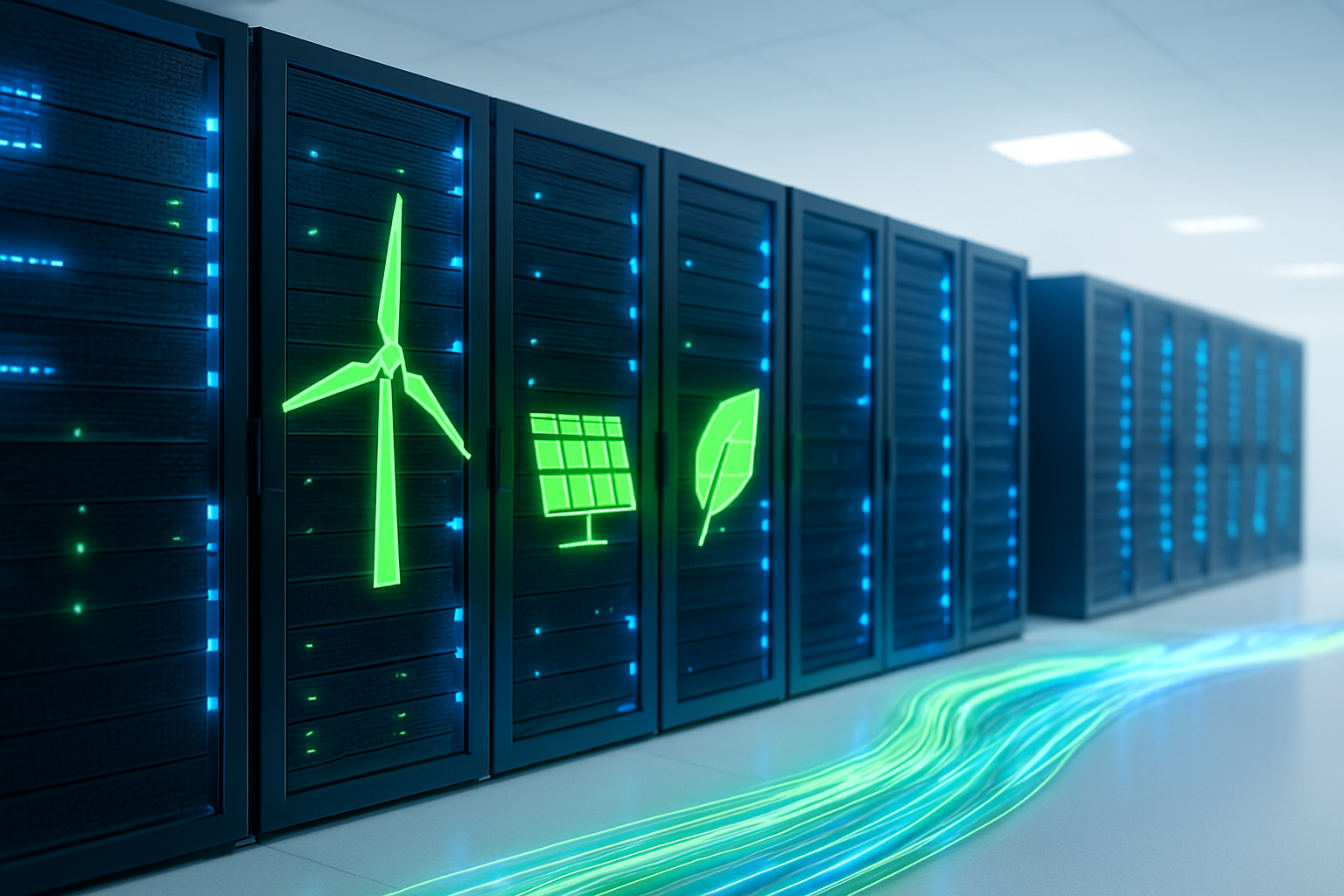
AI's hunger for energy is growing at a staggering pace, and the numbers don't lie. Data centers powering machine learning models are consuming electricity at rates that would make entire cities blush, while carbon emissions from AI computing continue to climb. The good news? Companies and researchers are fighting back with innovative solutions like energy-efficient chips, smarter algorithms, and renewable energy integration. Tech giants are investing billions in green computing initiatives, and breakthrough technologies are making AI models more efficient without sacrificing performance.
The path forward requires a careful balance between pushing AI boundaries and protecting our planet. We can't simply hit the brakes on AI development, but we also can't ignore the environmental cost of our digital ambitions. The answer lies in making sustainable computing a core priority, not an afterthought. If you're working in tech or making decisions about AI implementation, now is the time to champion energy-efficient solutions and support companies that prioritize green innovation. The future of AI depends on our ability to make it sustainable today.


Comments
Post a Comment